He felt very privileged to have the opportunity to articulate a lot of what he feels, but I think it weighed him down because he didn’t think anybody believed anything he said.
The Manics had only released one debut single when, in a summer 1989 essay in the American ‘National Interest’ magazine, Francis Fukuyama declared that the fall of the Soviet Union (with Communist China sure to follow) signaled the “unabashed victory of economic and political liberalism… the total exhaustion of viable systematic alternatives to Western liberalism”. ‘The End of History?’ was a glorious pat on the back for the NeoCons and the Western chauvinists: “Look, everyone! We were right all along! All these Communist states are failing completely of their own accordand we’ve just sat back and witnessed the natural crumbling of an all feasible alternatives! Go, unmoderated capitalism! And can we talk about the age of consent? No, actually, what you’re referring to is hebephilia…*”.
(*all direct quotes. Libertarians gonna libertarian)
By the time Fukuyama had been confident enough to remove that question mark and release the 1992 book ‘The End of History and the Last Man’, The Manics had released around ten further singles and a debut album – ‘Generation Terrorists’, which famously did not sell 16 million copies – that were all essentially angry ripostes to Fukuyama’s thesis. Rather than rejecting themselves to the alleged demise of all ideological disagreements and the all conquering discouragement of revolutionary thought, they were going to be a band so huge that they would change the very world itself. If they were the only thing left to believe in, so be it, but they would always passionately highlight that alternative, they would always be that alternative.
They couldn’t though. Five years after the fall of the Berlin Wall; after it was widely accepted that Communism no longer represented a clear and present enough threat to scare Western capitalist nations into some pretense of proper care for their citizens above basic profit. After neoliberalism became the one accepted doctrine despite nobody ever wanting it, The Manics plunged into the abyss of capitalist horror and released ‘The Holy Bible’. On the (cough) thirty first anniversary of the record’s release, here’s my long promised/threatened review of art’s greatest paean to the fall of Communism, and basically far too many words explaining why it’s the greatest album ever.
We’ve always had natural roles in the band. Sean, because he’d been a trumpet player and was into jazz, was obviously going to be the drummer. It was obvious Richey was going to be the spokesperson, the visual icon and a great lyricist – he just was. Nick was obviously a musician like me, but he was tall – he had to play bass. And I was the only one who could really play guitar and sing, so we just slotted into our roles.”
‘The Holy Bible’ was released only 34 months after that ‘New Art Riot EP’. Richey Edwards disappeared just six months after that.
But this post is not about Richey. Is ‘The Holy Bible’ the former co-lyricist and faux guitarist’s crowning glory? Duh, globulously, but that’s not saying much. If Kendrick Lamar’s next album had these lyrics people would be calling it his crowning glory. If Bob Dylan’s next album contained these lyrics people would be shocked how he’d managed to achieve a career high despite now only existing as a Tim Burton scarecrow made of broken twigs and chicken wire, and having decades ago lost the ability to vocalise consonants. If we brought Shakespeare back from the dead… You get the idea, the lyrics are very good.
However, I still don’t see this as ‘Richey’s album’. Sure, Richey may have contributed some of the greatest usages of language since some genius lost to antiquity decided to call a forward role a ‘roly-poly’. But he didn’t write the songs, and nor did he have even close to full control over the utter artistic triumph of the record. James Dean Bradfield (JDB) did the best work of his career somehow crafting anthemic, industrial, post punk anthems from the broken and misshapen twigs of the lyrics, and managing to drag both eligibility and intense enthusiasm out of often entirely hopeless words. Drummer Sean Moore also contributed to the incredible music and did some of the greatest, most exciting, most terrifying, most inspiring drumming of his (or anyone else’s) career; and – perhaps most importantly – sourced all of the samples from old VHS tapes. And Nicky Wire came up with the title for Yes. That’s a really good title, Nicky, well done.
I’m just playing, Nicky, you know I love you. All of you lads have done very well and should be proud of yourselves.
No, to celebrate the (cough) 31st anniversary, I’m going to give you a bit of background, I’m going to give you a bit of politics, I’m going track-by-track*, and I’m going to conclude by explaining exactly what makes it the greatest album ever, though I hope by that point it’ll be obvious.
(*Christ, I can already tell from my notes that the Yes entry alone is going to run past 25000 words 😩)
The first lyric I ever wrote with James Dean Bradfield was a track called Aftermath, it was about the miners’ strike, that’s the first song we ever wrote together. It was kind of unavoidable and inescapable.”
We grew up in the middle of the miners strike. Demonstrations everyday, many people starved, our friends’ families were evicted. We grew up to despise the environment in which we lived. Many miners were also self-convinced martyrs. They saw something romantic in starving and suffering. It was a part of being of their social class and they were proud over it. Absolute crap! Everyone deserved better! My generation started to rebel. We despised a lot of people and decided to be honest about it. Boredom was life. We were stuck in a vacuum
The Manics grew up knowing the enemy firsthand, living within one of the test tube experiments of an invisible ideology that would soon spread over the entire country. Mining towns in Wales didn’t quite beat Pinochet’s Chile to the punch worldwide, but Margaret Thatcher was happy to volunteer them as an early British experiment. Six years after her bezzie mate Pinochet rose to power in Chile, Thatcher’s Conservatives won the 1979 election and they too would also have their chance to spread the same precious gospel about how the price of labour should be left to the freedom of individuals to compete against each other over, in the hope of winning the chance to do every job at the lowest possible amount needed to not starve to death.
Trade unionism was decimated and workers disempowered; globalisation would transfer industry and manufacturing to cheap labour economies; public services were privatised; public and private undertakings were outsourced. Thatcher abandoned much of the country to the post-industrial, neoliberal economy while delightedly squealing “I’m going to deregulate, deregulate, deregulate!” like if Viv Nicholson had far more faith in the invisible hand. Those initial 20 pit closures led immediately to the loss of 20’000 jobs, which was already devastating to local communities and the working class across the UK. Long term, while there were 221’000 people working in Britain’s coal mines before the strikes, twenty years later in 2005 there were less than 7’000 (the UK’s last deep coal mine closed in December 2015).
We set ourselves the rule that we would never write a love song because we just felt that everybody knew what it was like to fall in love, and everybody knew what it was like to have a broken heart, but not everybody necessarily knew what it was like to hate something or to really hate somebody. I just think we are of our environment, wherever we come from. Just when we were getting into music, at about fourteen or fifteen, the Miner’s Strike was going on right on our doorstep. That really affected our whole community and everything. Sometimes, you know, you’re just part of the circumstances that surround you
You go into HMV or Virgin and 80% of any form of music – whether its World Music, rock, pop, soul, blues – is a derivation of ‘love lost/girlfriend left you/girlfriend come back.’ We thought it would be a good idea if we never wrote a song like that. If I was ever dramatically in love with somebody, I couldn’t possibly expect James to go on stage and sing ‘Baby Love’. I find love a very alien concept. People I know who are in long-term relationships have always been unfaithful, and I find that whole lie just really tiresome. That’s why I’ve never been involved in any relationship. I find other people attractive, so it’s kind of unfair to walk around with one partner
The Manics were in their mid-teens when the Conservative government finally beat down the miners’ and their communities’ show of working class unity. At an important point during their formative years, the band were directly exposed to neoliberalism’s new apartheid, where the working classes weren’t just denied any measure of the means of production, but were violently removed from playing any meaningful part in the economy at all. They were born into one of the areas most massively debilitated by the state’s new ruling order, and so they would always be aware how it was Us vs Them at the end of the day. Sure, the Miner’s Strike was beaten down by the ruling class, but it was still a strong showing of class consciousness that managed to rattle the state, and all because of just roughly 165’000 striking miners. What if this new band of theirs made a record that sold as many copies as 1987’s ‘Appetite for Destruction’ and inspired sixteen million people to strike against Thatcherism?? “Our first album was pure rage and destruction,” Nicky said, “There’s a certain working class rage that’s deeply embedded. It’s in our DNA”.
Whatever political party is around, I’m missing the point because I don’t get any worth from them at all. I think the Labour party are the biggest bunch of cunts on the planet. They’re selling everybody out, including themselves. They looked at Thatcherism in the eighties, and came to the conclusion that they weren’t getting into power because they were too extreme! They became more and more bland, more and more watered down, until you can’t tell the fucking difference. John Smith is a coward and a fraud, and deserves execution. The man’s a disaster. Neil Kinnock wasn’t any better.
That first album is one of the most incredibly obtuse, thrillingly illogical, and naively ambitious debut records of all time. Unfortunately, it came out in the 1990’s, which the band were not prepared for. In the 90’s, you see, nobody gave a shit anymore. To quote Taylor Parkes in Melody Maker, they were “the greatest rock’n’roll band in the world at a time when rock’n’roll means nothing at all”.
Communism didn’t topple capitalism, but kept it honest – and so saved it from itself. The very presence of a powerful rival ideology frightened capitalists into sharing their returns with workers and the rest of the society… the collapse of communism between 1989 and 1991 has left capitalism unchallenged and untempered – and increasingly unviable.
There was now no alternative. It was the end of history. Bill Clinton would win the US election three months after Generation Terrorists came out, which represented a major shift in the Western world’s ‘left’ and ‘right’ political parties. Soon, the parties would all turn away from arguing for real material and economic change. Elections would instead essentially be decided on whether or not you’d want bombs on the Middle East to be dropped by the air force’s first non-binary pansexual. The stealing and hoarding of the citizenship’s wealth was now not up for debate. Social democrats everywhere began to abandon even mentioning economic change to instead adopt the 80s neoliberal consensus. It previously wasn’t clear whether these were policies that people ever wanted or voted for, now that wasn’t even worth debating as these were the only policies they were getting. We beat Communism, remember? We’ve all agreed that this is the best and only form of government, so why bother even talking about economics and ideologies?? Thank God (who is now a major part of all of this again) that we’ve all been saved from insane ideas of collectivity, and re-acquainted us with the accepted truth that human beings are all pieces of shit motivated only by their own animal interests.
The Western world’s populations were informed that geopolitical differences no longer existed, and so the only thing really worth discussing were cultural issues. Soon, the main parties would only either focus on identity politics, or the identity of how much they hated identity politics. Billions of people would now be suffocated and exploited by a inhumane system of capitalist brutality, but every four years they can have a say in what bathrooms transgender people can use. Understandably, voter turnout dwindled as people generally aren’t stupid enough to still think it makes much of a difference.
and, as you can see, they were DELIGHTED to do so
The world had changed, perhaps more than we realised. People didn’t care about such things anymore. It wasn’t like 1977, when you could make a statement and get taken seriously
And that pretty much encapsulated how the band reacted to the muted response to their incendiary, revolutionary, geopolitically inspiring debut album. It fell flat because people didn’t care, and the couple of hundred thousand copies or so it sold worldwide wasn’t enough to engage the proletariat and inspire the masses to enact change. And, shit, now they have to do another album. There wasn’t supposed to even be a follow-up! They were supposed to make one brilliant debut double LP that sells millions of copies, make their big statement, change the world, then just disappear and go back to living with their mams. Instead, they had to make ‘Gold Against the Soul‘, because the world hadn’t been changed and they were contractually obliged to. As I said in my 2020 review of the rerelease, they were forced to “attempt to follow a debut album that simply couldn’t really be artistically and situationally succeeded”.
It’s one of the hills that I’m willing to die on (got a whole range of those in my head involving the Manics) that 1993’s ‘Gold Against the Soul’ is actually a great album. A lot of this is, of course, pathetic nostalgia and yearning for the simplicity of childhood – ‘GATS’ was the first Manics album I got into as a stupid kid, and it’s sometimes hard to shake off the dumb shit you liked when you were too young to develop critical thinking (see all those adult Star Wars fans. Oh, and also see my review of the Manic Street Preacher’s 2025 album ‘Critical Thinking‘). The type of glossy, stadium sized, grunge adjacent alt-rock that the band were attempting to ape is music I already had/have a soft spot for, and think the album is up there with the best examples of that type of music. Taken out of the context of the album, the highs on ‘GATS’ are incredibly high: six of the album’s ten songs made the band’s all time top forty, including their second best song of all time. We all have to agree that there are a handful of absolute alltimers on this record, even if you don’t love Nostalgic Pushead as much as me (which you won’t, because nobody loves Nostalgic Pushead as much as me). However, the new Manics podcast ‘You Love Us’ recently covered this album briefly and remarked how much many of the songs resemble Red Hot Chili Peppers, which I admit I’d never previously considered and oh my fucking God he’s right they abso-cocking-lutely do and now I hate this album.
Whatever mine and your thoughts are on the album’s occasional/frequent quality, it’s nonetheless a bit of a fucking mess. With far less of an obvious plan of action than the band’s debut, the record was obviously The Manics struggling to come up with a second great career plan after the glorious failure of their last one. In lieu of any great underlying principle, the band chose to throw money at the project. Isn’t everything evaluated in terms of money alone now, anyway. The band theorised that if they looked, sounded and spent like stadium level alt rockers, then they’d surely become them. The feather boas and the glitter adorning multicoloured band photos were out, in their place was the band dressed in leather and wearing shades photographed in black and white like they were in Stone Temple Pilots or Pearl Jam. Again, I thought at the time – and absolutely still so – that the band looked so fucking cool at the time (as a culture we simply weren’t allowed enough time with Peroxide hair JDB), but I think we’ve already established how far from the barometer of taste I am. It appealed to me because, at my heart, I am the kind of crusty old pathetic alt-rock fan (see: Blondshell’s debut album being ranked #2 in 2023) the band were generally aiming to drive out of their village with pitchforks: these are the sort of negative, lizard brain impulses that the Manics really shouldn’t be pandering to! They were supposed to be against all this bland, US monopolised, apolitical whinge rock, wha’ happen? Nicky Wire, as is often the case, put it best:
this is what they took from us
I think we’d reached the height of our attempt to be a straightforward rock band with ‘Gold Against The Soul’ – it was our ultimate version of a band that we couldn’t really be. We tried, and we did a really good impression. But I don’t think we were being true to ourselves.
But they tried really hard to be that uncontroversially successful (especially in the US) mainstream rock band that they never could be (especially in the US). And, when you’re bereft of real ideas, ‘trying hard’ tends to translate to ‘spending a lot of money’. The record was recorded in Oxfordshire’s opulent Outside (later Hookend) Studios, owned by Pink Floyd’s Dave Gilmour, for a cool £2000 a day. They started to turn into consumers, rather than artists. They began to resign themselves to the neoliberal belief that their wellbeing is no longer based on political realisation, but on how much money they spend and what they buy. Pearl Jam’s and Counting Crow’s 1993 albums both sold eight million copies (!), if Manics just adopted those postures, surely those bands’ successes would trickle down?? Nicky: “”We were just looking for that big hit…pretty much an album for MTV, the record company, the radio“.
Like it always does, neoliberalism left the band feeling empty, isolated, and spiritually void. ‘GATS’ wasn’t just the Manics’ failed attempt to be a straightforward rock band, it was also their attempt to accept the neoliberal superstructure. Them accepting the pointlessness of political engagement and instead resigned to trying to prove their worth by simply selling the most records and therefore making the most money.
It was a failure.
Fuck
That
Shit
Humanity Recovered, Glittering Etiquette
Most bands, on their day off, would look for a pile of drugs or drink or whatever – we decided to visit the death camps on our days off. We didn’t go there for a laugh. We were driving and we felt we should see this. It’s our idea of forcing humanity to face itself. They were pretty startling days. That was definitely one of the seeds for it, really. In Germany, Gold Against The Soul wasn’t selling many copies, and we were travelling around thinking, ‘We’ve got to regain our soul‘.
They came to that realisation during their slog through the globe promoting an album that none of the band really believed in. They visited the Dachau and Belsen concentration camps in Germany, and the Peace Museum in Hiroshima. Being confronted with the extreme consequences of the capitalist race for resources , the general apathy and neoliberal influenced political lethargy of that previous record no longer felt honest. The worse instincts of humanity were laid bare in front of them, and suddenly they didn’t feel like lessening themselves anymore in an attempt to ‘break America’ – capitalism’s attack dog whose governments had been responsible for a not insignificant portion of the world crimes that the band were now closely contemplating. As Wire put it:
A band dressed like Guns N’ Roses going to Dachau and Belsen. Obviously we’d read about it but to actually go there and experience the silence and the deathliness and the abject horror, it affected us all. I think that was the final piece in the jigsaw for Richey. There’s an overriding philosophy behind the whole album: evil is an essential part of the human condition and the only way to get over it is recognizing all hypocrisies, all evils – recognizing it’s in us all – which I guess is not a liberal view.
One of the band’s original mission statements was to Trojan horse their revolutionary ideas and left wing agitprop through mainstream rock gloss, to try and ensure that Karl Marx and Goya were next to Ace of Bass on Top of the Pops. But they realised that they had recently been in trouble of assimilating so well into a mainstream rock band that the Trojan horse was starting to feel empty. They needed to not just reevaluate what they meant as a band, but also deliver that statement in music not as immediately palatable as before. The public didn’t seem to want to buy their records when they were trying to make music as universally acceptable as possible, so why not, like, fuck everyone and make the music as distressing as the lyrics?
The Manic’s much touted adoption of Guns ‘n’ Roses as a musical touchstone in their early career was never a unanimous decision within the band anyway (as a unit, they were clearly working under democratic centralism). The Los Angeles hair metal punk band had legitimately changed the rock world with their 1987 album (and given certain people the ridiculous idea that a debut rock record could sell 16 million copies) and had obviously been fresh in the minds of a band formed in 1988. But after the glorious failure of that tactic, the band started to look towards their less commercially successful influences: classic British punk and post-punk like Wire, Magazine and Gang of Four; the metallic din of Killing Joke; the gaunt and stripped-down alienations of Joy Division; the dubby explorations of PiL; the industrial smear of Throbbing Gristle.
The first signs of this brave new musical direction came with one of the new tracks included as a B-side on the ‘Life Becoming a Landslide EP’. Released in January 1994 as the final single release from the already regretted ‘Gold Against the Soul’ album, Life Becoming a Landslide (their 11th best song ever) is a meaty and polished alt rock semi-ballad – an incredible song, but exactly what the band were planning on turning away from – and reached 36 on the charts. Which is, y’know, whatever. One of the b-sides, however, was Comfort Comes(25th best song ever). Where Life Becoming a Landslide and the rest of ‘GATS’ was excessive, epic and expensive sounding, Comfort Comes is minimalist, spiky and no thrills post-punk, with guitar lines piercing through angrily like knife slashes. The band liked this idea so much, in fact, that they’d essentially just inverse the notes and add lines about being a butcher for their next album’s central track. Comfort Comes was recorded in late 1993 and along with the new scaled back and compact (yet no less thrilling) bluntness came some of the band’s most poetically hopeless lyrics yet:
Need someone to nurse me Reach out for the first person I see Comfort the helpless sole vanity Caressing the broken heart of me The difference between love and comfort Is that comfort’s more reliable and true Brutal and mocking but always there A crutch for enmity’s saddest glare
He never really tried that hard to gain respect, he just earned it very naturally and never pushed anyone too hard. Even when he came to see us rehearsing in Wales before we got anywhere he never demanded anything from us and never pushed us into being anything we didn’t want to be. But the beautiful always die young, I’m afraid
L-R: Martin Hall, Nicky Wire, Sean Moore, Philip Hall, Richey Edwards, JDB
Not long after the Manics visited him, Philip Hall passed away from lung cancer, aged 34. Fuck, the band probably thought, At least things can’t get much darker from here.
Lol
Stretch it Taut, Clingfilm on Bone
It may well have been a matter of resources. Because of record company fees related to musical equipment, recording, record pressing, music videos, marketing, touring – including dumb shit like making an album at the £2000 a day gaff of the bloke from Pink Floyd – each member of the Manics was initially paid £250 a month by Sony records, which had recently been raised to a princely £200 a week. JDB was living with his parents after recently being dumped by his girlfriend, Sean was living with his girlfriend rent-free and Nicky – who had been married in September 1993 – was living with his in-laws. It was clear the recording of the next album was never going to have the same lavish treatment as the last.
But it was also the band taking more creative control over their direction, after that previous album seemed to be far too in thrall to record company pressures. They never informed Sony that they were making a new album, they just privately rented out the £50 a day, since demolished Soundscape studios. The unheated 16-track recording studio was in the middle of Cardiff’s red-light-district.
We knew that it would be a wrong decision to try and create this kind of music, which had threadbare emotions and hard political intent and acute observatory historical references in it. We knew that if we ended up trying to create this music somewhere in Surrey, England, which had four poster beds and every technical specification you could wish for, there would be something slightly off-message about that.
I suppose, in our youthful, delusional state, we thought there should be some kind of “method” recording, our version of method acting. We should immerse ourselves in a shitty environment to try and replicate the edge in the music. And that’s what we did. We hired a studio which we had used before in Cardiff, which was kind of in the red light area, and had no mod cons. It was a very, very monotone kind of experience. And we decided we wanted that kind of utilitarian vibe to try and rub off in the music, I suppose. It all sounds pretentious and I wouldn’t want to repeat it all now, but we were young.
The recording of the album seemed to capture the band at a particular point in their careers and all of their lives that simply could not otherwise be captured by themselves or any other band again. The bands negative reactions to the record company pressures that resulted in the muted and oversaturated sound of their previous album, and instead aiming to make a uniquely cold yet impassioned work that the band crafted themselves with minimal record company interference. Them committing to not recorded in such luxury environs again saw them take it upon themselves to record it in as budgetarily sensible methods as possible, with the unwelcoming cold of that Cardiff studio next to “some businessman having a blow job in a [Vauxhall] Cavalier” (Wire) adding to the general disgust and depravity of the recording. The record’s lyrics were written by a mentally unravelling Richey Edwards and a recently happily married (to a woman he’s still happily betrothed to and now has two children with) Nicky Wire, with such apposing levels of happiness somehow merging together in a beautifully gothic political anger that would be simply impossible to replicate. And JDB, recently dumped by a girlfriend he’d recently brought a house with, threw himself into his music composition like never before: what was he going home to, after all? His fucking parents?? Fuck that, let me play with that Of Walking Abortion guitar time signature again.
These circumstances; this place in their career; the contradicting and yet perfectly complimentary different stages of mental health; all created interplaying contradictions that resulted in an album of absolute historical quality. It was lightning in a bottle. But, like, mostly negative lightning. Shitening in a bottle.
“Fucking hell, Richey, you’ll do anything to whore yourself to get on the cover of NME” Nicky, when this photo was taken in 1994, according to photographer Kevin Cummins
To describe it like such a perfect combination and clash of material conditions, would be to to rob the album of it’s near psychotic deliberateness. From the beginning of recording, every note, every drum role, every insanely crammed lyric, everything on this record would be meticulously planned for and deliberately created by the band. Whereas their last album had been a confused response to not meeting their own expectations, there would be nothing confused about this record. The band no longer cared about success – succeeding in a world that was so maliciously wrong would only be another form of failure.
In the country outside that cold and dilapidated Cardiff studio, Britpop was really starting to catch fire and would soon become by far the UK’s biggest musical movement of the 90’s. Suede’s and The Auteurs’ debut albums had been released the previous year – along with Blur’s ‘Modern Life is Rubbish‘ – and Oasis’s Supersonic was released while the band recorded the album*. Britpop would quickly become monumentally successful, but as a ‘genre’ it was always cripplingly regressive while only paying homage to the most superficial elements of its idols. While aping the sounds and postures of the ‘Swinging 60’s and ‘British Invasion’ bands of thirty years prior, Britpop stripped these bands of all their political meaning and made sure to blunt any subversion into the most state friendly empty crowd pleasers possible. And while the scene around those 60’s acts preached the importance of solidarity and community, and so often had an eye on contemporary social movements, Britpop instead lapped up neoliberalism’s teachings of individualism and political apathy. Bands now just wanted to get loaded and have a good time. Clinton was already in, and Blair would soon copy his playbook (shaking Noel Gallagher’s hand on the way in), explaining to people that they’d never had it better and that we should celebrate the end of politics. Britpop blindly championed the complete failure to change any materialistic reality, and despite the proudly working class identity of some (but definitely not all…) of its bands, Britpop was still on the side of deteriorating social mobility and the poorer classes being quietly pushed out of any discourse. The 90’s were becoming an upside down 60’s. The Manics has never seemed so alone.
(*in a wonderful gift of coincidence that it just catnip for bloggers like me, Oasis’s monumentally important/successful debut album would be released on the exact same day as ‘The Holy Bible’. Last year, I had actually planned to write an article comparing and contrasting the artistry and importance of the two albums, until I realised – predictably, really – that I had waaaaaaaaaaaay more to say about the greatest album of all time. So, instead you got your piece solely on ‘Definitely Maybe‘, and you get your Manics retrospective a year late. And you’re grateful)
When people talk about us, they’ve still got this idea that the music can actually like, Change The World, or Smash The System. That’s nonsense; I’ve never thought a band could ever do anything that important. It can change individuals, it can create a common ground for important issues, but in terms of actually doing something, changing the economic infrastructure, it’s not gonna do that, it never has done.
‘The Holy Bible’ Is the opposite of that. But it’s not proud of it. And it certainly isn’t happy. While ‘GATS’ was a confused attempt to realign the band with neoliberal principles, to create a product that would prosper within capitalism’s strict boundaries, ‘The Holy Bible’ is actually a pained resignation to the world’s new realities. It’s submission to the ‘end of history’ as it outlines the consequences of this surrender. It’s a record that stops fighting as it’s submerged in the post-USSR – post ‘End of History’ – fetid deluge of neoliberal forced consensus, but at least screams as it goes down.
As if to illustrate how the band were now not part of the solution, merely narrating the problem they’d been compelled to become a part of, they played a couple of gigs in Thailand in April 1994.
Dumb Cunts Same Dumb Question
The Vietnam War was an act of American imperialism in Southeast Asia. While the war was centralized in Vietnam and unofficially in parts of Cambodia and Laos, much of the world felt the heavy effects of the forceful anti-communist manifestation. While Thailand remained militarily uninvolved, the Vietnam War reshaped both Thailand’s economy and relationship to the West and served as the catalyst for the militarization of the Thai state…
The presence of U.S. troops in Thailand during the war presented an opportunity of economic growth from foreign capital, and commodified sex was in high demand. Between 1965-1972, $100 million was spent by U.S. soldiers on R&R, including commercial sex, in addition to direct monetary aid from the U.S. government. The Vietnam War marked the emergence of a sex tourism industry in Thailand…
Thailand’s relationship with Western imperialism mirrors colonial relationships in many ways. During the Vietnam War Thailand took advantage of this relationship in attempt to advance economically. In an electronic source, Dulcey Simpkins describes: “The presence of military bases in developing countries such as Thailand, the Philippines, and Vietnam created opportunities for wage labor based on selling sex. As a result, poor women in the countries hosting superpower bases were integrated into an international political economy via sexual imperialism”. The emergence of a market for sex work geared towards American military personnel offered Thai women a space to participate in the international market economy.
All developing economies abuse their young. When Britain was a developing economy we sent our children up chimneys and down coal mines and out into the street to steal. This is just abuse on a wider scale. When we ask the Thai people about these girls they say that most of them want to be here. Some get sold here by their families, especially if their parents are drug addicts but a lot are here basically because some kind of flat and sanitation at the centre of the city is better than what they had
In the 1990’s, ‘alternative’ rock first showed signs of really taking off in Thailand, and despite hardly being household names in their native UK, The Manics were curiously perhaps the biggest foreign ‘alternative’ band in the country. The previous album ‘GATS’ sold 50’000 copies in the country, which qualified for a platinum disc. 1994 also saw the release of the countries first weekly music magazine, named ‘Generation Terrorists’ (“Alternative Music For The Alternative Idiots”) after the band’s debut album. The editor of that magazine, Norasate Mudkong, also ran the Thai Manic Street Preachers fan club. According to Mudkong, the band really resonated with Thai audiences because of their banging and accessible four minute pop rock songs combined with the eloquence of their lyrics. Same, Thailand, same. The band’s whole aesthetic must have also chimed with a country known for its acceptance of more diverse gender roles. Mudkong also explained that the Thai people especially connected with Richey, who was obviously so calmly intelligent, while at the same time extremely repressed. Guy was basically Thai. Sony obviously wanted to capitalise on that mania, and so with the help the local DJ Wasana Wirachartplee the band flew to Bangkok for two sold out dates at the MBK Hall*.
(Wasana with Richey and Nicky in Bangkok, 1994)
(*the Manics are often cited as the first ‘alternative’ rock band to play Thailand, but that probably depends on your definition: The Clash played a gig in Bangkok in 1982, and it was while they were there that Pennie Smith shot the cover for their ‘Combat Rock’ album)
The band were treated to the classic ‘big in Japan‘ unexpected heroes welcome when they arrived in Bangkok, and dozens of young female fans surrounded the hotel they were staying in to catch a glimpse of their idols and offer them gifts of gratitude. Most gifts were like a giant Snoopy doll that was gifted to Richey that the band were unable to take back on the aeroplane home (they were all “stuffed with heroin”, anyway, reasoned Nicky). Other fans would ask to be photographed next to Richey’s ‘4 REAL’ scar from the infamous incident with Steve Lamacq. One fan gave Richey a set of knives. She asked him to look at her in the crowd as he cut himself onstage.
The most common reason why people harmed themselves was “wanted to get relief from a terrible state of mind” in both the UK and Thailand (87.1% vs. 79.1%) followed by “wanted to punish myself” (71% vs. 72.1%)…
People in the UK and in Thailand reported significant differences in “wanted to frighten someone”, “wanted to get back at someone”, “wanted to find out whether someone really loved me”, “wanted to get attention”, “wanted to be a part of the group”, and “wanted to avoid doing something or being in some situation”. Thai people reported a higher percent of “cry for help” motives than British people…
The most major difference between the two countries was “wanted to find out whether someone really loved me”, reported by 41.9% of Thai people but merely 4.8% of British people. The second strongest difference was “wanted to be a part of the group”; 16.3% of Thai and 1.6% of British people reported this, followed by 32.6% of Thai people and 4.8% of British people who reported “wanted to get my own back on someone”.
Between shows, the band couldn’t resist a trawl through the seedy underbelly of Bangkok, making a trip to the notorious Patpong red light district the first chance they got, like the temptation to behave like lecherous old expats was too much to bear. Apart from Nicky, of course. The bassist had quit drinking a couple of years previously – the Patpong Peppermint Bistro & Club probably didn’t even sell Sprite – and was/is such a hypochondriac that he believed even seeing the words ‘Bangkok sanitation’ written down would give him dysentery. Also, he couldn’t be arsed: “”Perhaps I am xenophobic in the sense that I find it very hard to fit in in other countries. Then again, I find it equally hard to fit in in Wales sometimes“. The rest of the ‘Pussy Posse‘ were eager to do a bit of brothel hopping though, and a couple of journalists from NME and The Face tagged along. The grotty affair was famously documented by the NME’s Barbara Ellen:
We move along to other bars. More wooden gyrating; more frankfurter waving boneheads drooling down their shell-suits. By this time, no-one’s even pretending to be scandalised. Somewhere along the way (probably ten seconds after entering the first bar), we have become de-sensitised to our surroundings, journalists, musicians and even record company heads all merging into one blurred scrum of loutish Western degeneracy in search of alcohol.
As James points out: “We all used the classic get-out clause. Let’s not get moralistic, let’s not question any economic factors of anything. We’re just here for a drink”…
Not only do two of the males in our party accept a young girl’s offer to let them squeeze her breasts for the equivalent of 40p (complaining loudly afterwards: “They haven’t got much, have they?”), James bets Gillian the press officer 40 quid that she won’t get up onstage and dance with the swimming costume brigade. She accepts the challenge, but then refuses to collect her winnings.
Yes, I know, it was the nineties; the first episode of Loaded magazine would be released the very next month after the band’s enthusiastic sex tourism (and before it was printed in the NME); sexual exploitation and commodification of the female body would soon be officially considered ‘Top Bantz’. I remember growing up for that era. I might have been too young in the 90’s for similarly carnal colonialism, and then when I was old enough I was too much of an alcoholic to ever have enough spare cash to even fund a weekend trip to Shrewsbury’s Gropecunt Lane, but it’s not as if I was above the wider acceptance of pandering to men’s base sexual impulses. I never read Loaded Magazine that often, but I would buy FHM near enough every month, and would even later frequently buy the weekly Zoo and (ugh…) Nuts magazines. Although my own personal desire for objectification was perhaps on a more mainstream and commercially encouraged level, but I would have made the same mental justifications. I was struggling to find work, who can blame these people for getting out any way they can? Most of the girls want to be here, surely? It’s not like if I didn’t participate it’d just cease to exist, right? Maybe I even let myself be overwhelmed by misogyny completely and had thoughts along the lines of “I don’t feel any need to be accepted by women whatsoever which is the way I’ve always felt, so it’s reassuring to be me for once.” (yeah, JDB actually said that on the Thai trip).
“I was a complete lad the whole time we were in Bangkok. I took everything at face value like a complete brainless idiot. It wasn’t even a matter of make sure you have safe sex because I didn’t have any sex in Thailand…”
There was always that get-out. Despite their 18-30 holiday aping, lasciviousness and (occasionally ‘ironic’) appreciation of the countries weaponised sex trade, they at least never had sex with any of the likely trafficked and sexually exploited prostituted women in an country where 25% of DFSW (‘Direct Female Sex Workers’) were infected with HIV at the time.
Though Richey did pay some poor Thai girl for a handjob.
On the whole trip Richey had been in the most Richey form imaginable with the gathered journalists, machine gunning out provocative, illiberal, challenging and gleefully politically incorrect statements at what seems like an inhuman rate:
It was when Richey spoke about sex that his state of mind became more clear, and why paying for a prostituted woman was no big deal at all to him:
Every time I’ve slept with a groupie, I’ve always felt dirty afterwards. It’s very functional. I know for a fact that I could go downstairs now and come back up and fuck somebody. I don’t like doing that, so if I go and pay 2,000 baht at a massage parlour and have a bath and get jerked off, to me it’s preferable. But at the same time, if we were like other bands, a party band, and we went out to some bars in Pat Pong and got pissed, came back, smashed up the hotel room, went onstage, were very aggressive, fucked some girls afterwards… in lots of magazines we’d get complete respect for doing it… But because we’re not like that, we stand in danger of being condemned. We’re just being more modem about it. For me, everything is very carefully thought out. This is the way I choose to live my life
Paying for sex with prostituted women is the ‘modern’ way of having sex. These animalistic urges now simplified into economic activity, just as Thatcher dreamed. Functionally (functionally, functionally, functionally, functionally), is there any real difference between some trafficked child earning money by satisfying customers, and some young groupie allowing herself to become her rock hero’s wank cloth for that night?
Well… yes… There’s a big difference. I’m not saying that either are necessarily ‘good’ or any sort of victory for feminism – the one throughline is how awful Richey comes across – but it betrayed the kind of neoliberal rot that the band’s upcoming album was about to narrate. A kind of moral relativity where one person’s circling of the drain is by no means more mortally superior to the other’s. Purgatory’s circle, drowning here.
And yet, that album opens with one of the most powerful song about prostitution ever.
…These capitalists have some very cheap and malleable workers who will produce efficiently enough what they want. And there is a seamlessly endless supply of children to use for such work coming from desperately impoverished circumstances where their parents are willing to in effect sell them.
And in these plagued streets of pity, you can buy anything
For 200, anyone can conceive a God on video
Yes
Liberals will always celebrate how one of the most important aspects of the fall of Communism in Eastern Europe was the loosening of sexual taboos. Yes queen! You go and celebrate your new sexual freedoms by starting your own feminist, female centred small business! You are now free to choose not to starve to death after the removal of all adequate welfare systems and supportive institutions by selling your body on the street to the ever contracting group of people in the country who can afford to pay money for sex! What’s that? Has forcibly opening your country’s markets crashed the economy and meant less and less people can afford to fuck you as many times as it takes in order to earn enough pitiful money to feed your starving children whatever pitiful food is affordable? That’s great! That just means you’re able to make use of another one of neoliberal’s proudest regulations: globalisation! You are now able to redistribute your body to those wonderful countries that have won this zero sum game of capitalism we’re now playing! I mean, sure, there’s, like, ten countries in the world now where that’s the case, but why wouldn’t you want to be relocated/trafficked into Western Europe or North America?! Are you against the grind??
The surge in women trafficked out of Russia and the other former Soviet countries into the booming sex markets of Western Europe has a been a nice metaphor of how neoliberal capitalism works. We’re going to strip you of all your assets; we’re going to fuck these assets raw until they’re a shell of their former selves; we’re going to be sure to pay far less than its worth because of the lack of respect we have for foreign economies; and then we’re going to celebrate you exercising your liberal rights.
That’s when he met Luke, in the next home he went to. He was ten then and Luke was twelve and they used to see each other in the home but they didn’t get to be friends until they both started working together. Luke was already doing it, but he wasn’t the one who put Jamie on to it.
“There was these two bigger lads, Wayne and Anthony, and they got me in the shower and Wayne said ‘Get some money for us or we’ll blow your knees off’. So I had to get a lot of money, but that’s not how I got started. That was Michael Jones who put me on the game. He was 15. He took me down town and he asked me if I would get some money for him. I said ‘How?’. He said ‘Go to that man and ask him if he wants business’. So I did, and the man said ‘What do you do?’ I said ‘I don’t know’. And I shouted at Michael ‘What do I do? He wants to know what I do’.
“So Michael said ‘Tell him you’ll ‘T’ him’. That means toss. ‘T’ for toss. Only I didn’t know that then. He took me round the corner and I said ‘How do you toss?’ and he said ‘Do this’. I did it and he give me £50. I gave £25 to Michael and I spent mine on sweets. That’s when I was ten.”
As a statement of intent; as an aggressively drawn line in the sand; as a clear rejection of their recent past; as an album opener – as this album’s opener – Yes is perfect (and their third best song ever). Hurried, immediate, urgent, and with some of the most ambitiously bleak lyrics ever committed to a rock song. Yet backed by music and a melody that’s disarmingly sweet and calling to mind The Penguin Orchestra Cafe’s Music For A Found Harmonium (and including a chorus melody that Wire claims was cribbed from Wire’s Outdoor Miner). Fuck, words like this being attached to any song, any melody, any sense of buoyancy at all, would be disarming. It’s an explicit and candid exploration of the psychology of someone forced to sell their body. It obviously has metaphorical meanings, but it’s such a powerful song because it works just as well (if not more so) as just a surface level text on the imagined psychological mindfuck of being prostituted. There are, of course, levels. But just the self-evident presentation of someone forced to commit violence upon themselves in the name of material gain is incredible. Poetically, lines like “Power produces desire, the weak have none/There’s no lust in this coma even for 50/Solitude, solitude, the eleventh commandment” are simply beautifully tragic enough at face value. And while the song is obviously in ‘character’ (a character most people assume is a woman, though their gender is never mentioned in the lyrics), parts like “I eat and I dress and I wash and I still can say thank you/Puking, shaking, sinking, I still stand for old ladies/Can’t shout, can’t scream, I hurt myself to get pain out” were obviously close enough to Richey’s own mental state for JDB to struggle to sing them decades later. Yes, I know, a lot of these words are difficult to sing – there’s like three dozen words per line – but you get my point.*
The song’s meaning is often wrongfully interpreted – including by members of the band (“It’s the prostitution of what we’ve felt over the last three years”: Nicky to NME in 1994) – as that old boorish topic of being in a music band feeling just like prostitution. Manics’ own take on the classics like We Are All Prostitutesor Just a Gigolo, if you will. But there’s something far more universal and insidious about Yes. Richey’s introductory note to the song mentions how “Prostitution of The Self. The majority of your time is spent doing something you hate to get something you don’t need. Everyone has a price to buy themselves out of freedom”. Which… y’know… that’s just capitalism.
‘The Holy Bible’ as an album is about pitilessly and sorrowfully surrendering to neoliberalism now that all alternatives have failed. And its opening track finds the title character battered to exhausted by the labour of existence, but without any option but to keep obeying. “Don’t hurt, just obey, lie down, do as they say/May as well be heaven, this hell smells the same”. The work that prostitution is a metaphor for in the song isn’t the job of being in a moderately successful rock band, but the soul sapping grind of simply existing. And, especially in the increasingly hedonistic and self-centred 90’s, you had to make sure everyone knows how much you’re enjoying it. “To show displeasure’s shame” is the closest thing the song comes to a joke (and even then… y’know… not really), speaking of how in a society that increasingly values conspicuous displays of how great things are going, the greatest shame is always going to be admitting that you’re not happy. Being forced into prostitution after your landlord evicted you and your children are on the brink of starvation? It’s amazing how you’re able to own your feminine energy and can break society’s sexual taboos!! You’re not happy that you’re being forced to sell your body on the streets?? Alright, Nigel Farage, take your po-faced conservatism to Truth Social, alright?
I’ve called into question the gendering of the protagonist of Yes, but the problem isn’t people assuming that prostitutes are women, the problem is that the vast majority of prostitutes ARE women. It would be extremely foolish to pretend prostitutions isn’t gendered. For centuries, the inferior economic position of women and their dependence on the male wage has assured that far more women are forced to empower themselves by turning to prostitution as a means of, y’know, not dying. And in the 90’s the only real difference was the mainstreaming of prostitution, and how every woman was now expected to prostitute themselves in day to day life, to ‘take control’ of their sexuality and femininity by selling as much of their sex as possible. There was a debate throughout the decade, after the fall of Communism, whether the increased focus on the sexualised female form was either empowering or exploitative. But there wasn’t much debate on whether or not women’s body should now be so commodified – everything is an open market now, women’s only choice in the matter was to what extend they were going to advertise their availability in the open market of ideas. Opting out was never a choice. You had to say Yes. You can be sex positive or sex negative, but not sex ambivalent.
…and goodbye Andrea Dworkin
And in introducing an album that’s going to be centred around hopelessness, around how the human race has eliminated all alternatives and hopes of reprieve, Yes also stresses how things are beyond help now: “Funny place for the social, for the insects to start caring/Just an ambulance at the bottom of a cliff”. This phrase was also taken from that same Nick Davies article quoted previously:
The social workers, who are supposed to care for most of these children, have even less power. At Notts County Council, a senior official said: “In our experience, in the last few years the nature of the young people we are dealing with in care has changed. We have tremendous problems with them. Our community homes now contain a combination of the most damaged, deprived, depraved and delinquent children, and they are incredibly difficult to work with. And our problem is that we are the ambulance at the bottom of the cliff. We pick up the pieces when they have been damaged. At best, we may find a remedy. At worst, we are just running a damage-limitation exercise.”
In a cute little postscript, nine months after ‘The Holy Bible’ was released, McAlmont and Butler released a stone cold classic single (which isn’t talked about enough these days: sort it out, kids) called, wait for it, Yes. Nicky Wire would later joke about his annoyance at this robbery, telling Buzz “”I still love that McAlmont & Butler record, but I’m still annoyed they nicked my song title for Yes! Even though all the lyrics were Richey’s, the title was still mine. And ours has the better lyrics definitely. It’s a glorious record though”. I get it: the title for Yes was the only thing Nicky did for this album, so he’s always going to be extra defensive over it.
I’m just playing, Nicky, you know I love you. All of you lads have done very well and should be proud of yourselves.
However, the band loved the production work on McAlmont and Butler’s Yes so much that they actually invited the producer Mike Hedges to work on 1996’s ‘Everything Must Go’, their first album after Richey’s disappearance, and in doing so ushered in a lusher, more expansive and optimistic sound that would lead to the band selling (roughly) sixty eleven sqbillion records.
The real reason for the selective assault on assault rifles is because of what, or rather whom, these guns symbolise. As Bill Clinton put it in a recent press release, they are “the weapon of choice for drug dealers, street gang members, and other violent criminals”. Here Clinton was using the well-known code with which racial buttons are pressed in American politics. ‘Drug dealer’ and ‘gang member’ are established in the public mind as euphemisms for black or Latino inner-city dweller. Now ‘assault weapon’ has been added to the list of racial buzzwords.
The use of the category ‘assault weapon’ seems particularly perverse – as if guns wielded by respectable citizens were ‘defence weapons’. All firearms are by their nature ‘assault weapons’. But in this context, the differentiation is used to distinguish guns wielded by blacks from guns wielded by respectable America.
While the previous song contains allusions to the corrupt and decaying nature of the new neoliberal world monopolitic, Ifwhiteamerica… (40th best song ever) is a gloriously unsubtle and nakedly antagonistic swing at the big boys. If many people, including the band themselves, were disappointed with the lack of political discourse and agitprop on ‘GATS’ in comparison to their debut album, these 295 words seem like a concerted effort to almost overcompensate. While I might have just taken the piss out of his ‘title of Yes‘ contribution to the album, Ifwhiteamerica… was actually almost entirely written by Nicky Wire, utilising his far too rarely exhibited gift of political logorrhea writing style that he’d later show to great effect on Freedom of Speech Won’t Feed My Children, Intravenous Agnostic(#48) and Critical Thinking.
The song presents vacuous popular culture and consumerism (River Phoenix! Big Macs! Your idols speak so much of the abyss!) as intended distractions from America’s aggressive foreign policy as capitalism’s attack dogs and the countries they had brutally ‘helped liberate’ (“Grenada, Haiti, Poland, Nicaragua/Who shall we choose for our morality?”). The song comments on how the country’s domestic oppression also runs counter to all this morally correct work the US is doing apparently ‘saving’ less civilised countries abroad. The test run of Ifwhite… actually took place before even ‘GATS’ was released, on Dead Yankee Drawl, the b-side to Little Baby Nothingreleased in November 1992:
Bill and Ted and Wayne’s World drawl Just another dull fucking bore Vietnam’s cool now and even Superman’s believed Hussein in power as the media war retreats
That peppy, energised but ultimately slight pop-punk b-side may otherwise be a generally overlooked and ignored part of the band’s discography (and wasn’t one of the twelve b-sides that made the band’s top 100), but it was actually the first example of the incredible weight and amount of quickfire references to people, places and historical events that would fully flower on ‘The Holy Bible’. However, while Dead Yankee Drawl mainly concentrated on the dichotomy of the really dumb and the really politically obvious (Bill and Ted! Oscars! Vietnam!), Ifwhiteamerica… delves deep into the Marxist belief that class and race are intertwined to create something psychologically revealing while also sardonically thrilling. Oh, and actually, anti-gun legislation can be racist before it’s emancipatory, so fuck all y’all liberals.
That final chant to “Fuck the Brady Bill” references the ‘Brady Handgun Violence Prevention Act’, which was one of those mealy-mouthed US firearm laws that to my pasty, fat British ears sound utterly useless. The passing of the law meant that people couldn’t buy more than three semi-automatic rotating cylinder revolvers on the first Wednesday of the month if they’d shot and killed more than eight people in the previous six hours, or some shit. As the indispensable website 227 Lears discovered, the idea behind the line – and perhaps the entire inspiration for the song – likely comes from a Kevin Young article in the November 1993 issue of ‘Living Marxism‘ called ‘Gun control in the USA’. In it, Young argues how such meaningless gun laws exist only to disenfranchise the lower classes (who, unfortunately and for historical reasons, tend to be black in the USA) and ensure that only the white state is armed. The bill only “gives a liberal edge to an authoritarian crackdown”. In their exhaustive research, 227 Lears also discovered other obvious influences from contemporary issues of ‘Living Marxism’ on the lyrical themes of ‘The Holy Bible’. Joan Philips’s ‘Who’s Next – Hitler?‘ – also from the November 93 issue – is an exploration of the worrying positive re-evaluation of fascist leaders that is echoed in Of Walking Abortion; while the anonymously penned ‘The Right to Be Offensive’ from the February 94 issue has strong links to PCP. Comrade Edwards!!
Or, erm, I guess ‘Comrade Wire’ for Ifwhiteamerica…? Whatever…
I’m just playing, Nicky, you know I love you. All of you lads have done very well and should be proud of yourselves.
America is still trying to convince itself it is positive, enlightened and absolute. Zapruder the first to sow doubts behind the reality/death of JFK. Brady Bill typical – glorify gun culture until The Massacre gradually moves from the inner cities to the suburbs. The consequence arrives. Still believe Democrats are an alternative
Richey in the album’s explanatory notes
Zapruder, the first to masturbate The world’s first taste of crucified grace
Lyrically, it’s an astonishing whirlwind of ratatat references and exposure of how the imperialist core of the USA is both the executer of the worse kind of international violence in support of neoliberalism, and also the route of most of the cultural nonentities that keeps the world properly distracted. It’s obviously typographically inspired by the song Antiamericancretin by longtime band faves McCarthy. Although that 1989 song was actually more critical of British leftists attacking America rather than focusing on the dangers of UK nationalism. Perhaps it’s a response by the Manics to say “No seriously, have you seen the state of that shit though!?”. That doesn’t explain that rouge apostrophe mark in ‘its’ though. That’s been the bane of my life for 31 years now.
Musically it’s somehow even better. JDB constructs a perverted Broadway musical format complete with a quasi call and response (“(Conservatives say!)There ain’t no black in the Union Jack/(Democrat say!)There ain’t enough white in the stars and stripes”). Citing ‘West Side Story’ as an inspiration and calling it “the American Musical gone wrong”, JDB somehow manages to craft a musical backing that’s as utterly insane and provocative as the lyrics. Which has to be inhuman: have you seen these lyrics?? But the band would have likely given up on the song completely – struggling to match the violent lyrical dysentery with appropriate musical backing – were Sean Moore not to decide that he knew exactly where it needed to go and contribute one of the greatest high octane drum tracks of his career.
It’s one of those songs where it just happened, the ideas were there, the little fast tom. I was thinking all the time of London Calling. For us it was the end – third album, everything’s bombing, fuck it, let’s do what we want.
The male is a biological accident: the Y (male) gene is an incomplete X (female) gene, that is, it has an incomplete set of chromosomes. The male is an incomplete female, a walking abortion, aborted at the gene stage. To be male is to be deficient, emotionally limited; maleness is a deficiency disease and males are emotional cripples.
SCUM [Society for Cutting Up Men] is too impatient to wait for the de-brainwashing of millions of assholes. Why should the swinging females continue to plod dismally along with the dull male ones? Why should the fates of the groovy and the creepy be intertwined? A small handful of SCUM can take over the country within a year by systematically fucking up the system, selectively destroying property, and murder.”
Who’s responsible? You fucking are Who’s responsible? You fucking are Who’s responsible? You fucking are Who’s responsible? You fucking are Who’s responsible?
The Society for Cutting Up Men/SCUM was formed by Valerie Solanos, and was such an exclusive club that she remained the only member until her death of pneumonia in 1988. By then Solanos was aged 52, homeless and destitute. Born in 1936 in a working class New Jersey family, Solanos experienced physical and sexual abuse by both her father and grandfather, had given birth to two children by the age of 15 (that were both taken away from her by the state), but was smart enough to win a scholarship to the University of Maryland, graduating with honours in Psychology in 1958. She then drifted out of education and ended up in New York City, supporting herself through begging and prostitution (in those plagued streets of pity you could buy anything) while she worked on her radical feminist satirical play ‘Up Your Ass‘. Solanos’s friend and occasional roommate, the drag artist Candy Darling, had found themselves in the inner circle of Andy Warhol’s Factory, and Solanos desperately urged Darling to pass the script on, needing someone of Warhol’s clout to get the play off the ground. All the time she was fleshing out her ideas on radical and violent feminism and working on what she called her Manifesto, a bare and primal feminism that did away with all niceties and instead focused on loudly voicing ‘unladylike’ rage. Then, in 1968, enraged at the artist claiming to have lost the copy of the ‘Up Your Ass’ play that Solanos had given him, she shot Andy Warhol at The Factory Art Studio before given herself up to the police. The ‘SCUM Manifesto’ – previously only available through the 2000 copies Solanos herself would sell on the streets of New York City, – gained wider publication in 1968 in the wake of the shooting.
‘The Holy Bible’ so far has narrated neoliberalism’s choking effect on those on the bottom (Yes) and sardonically mocked the hypocrisies of the leeches at the top (ifwhiteamerica…). By track three, however, the album’s true darkness emerges: fuck it, does the human race even deserve any better? We’ve obviously decided this is how we want things, we’ve all consented to being exploited. Of Walking Abortion(#5) is one of ‘The Holy Bible’s central tracks because of how starkly and mercilessly it embodies something that will become the album’s grim central theme. The song gives up on empathy and solidarity, and instead decries that the entire human race is beyond saving. There is a soil within everyone that cultivates the growth of fascism and supports the worst excesses of cruelty. In his book ’33 Revolutions Per Minute: A History of Protest Songs from Billie Holiday to Green Day’, Dorian Lynskey describes Of Walking Abortion as “the protest song [that] eats itself”, that “The underlying principle of almost every protest song is that people are essentially good and only need to be liberated from a few malign individuals. But Of Walking Abortion contends that people are weak and selfish and create these monsters themselves […] The key image is “Hitler reprised in the worm of your soul,” the human weakness that allows fascism to thrive”.
The song take its name from a line in Solanos’s manifesto quoted above, and its “Loser, liar, fake and phoney/No one cares” calls to mind the categories of men whom Solanos imagined her vanguard of revolutionised feminists to eliminate on a case by case basis.
…Rapists; politicians….; lousy singers and musicians; Chairmen of Boards; Breadwinners; landlords; owners of greasy spoons and restaurants that play Muzak; ‘Great Artists’;…cops; tycoons…; liars and phonies; disc jockeys; men who intrude themselves in the slightest way on any strange female; real estate men; stock brokers; men who speak when they have nothing to say
It is not a song of male loathing or feminist solidarity though. Instead, the band either subvert or lessen (or both) the intent of Solanos’s original by widening the targets to not just men but to all of humanity. Present in human nature is the potential of Hitler, Mussolini, Miklós Horthy (the Hungarian prime minister who handed over Hungarian Jews to the Nazis) and Josef Tiso (the Slovak president of the First Slovak Republic, a puppet state of Nazi Germany during World War II) , who are all explicitly named in the lyrics. It’s notable that all of these examples of human nature’s excessive excrement are all from the Second World War – the album centres the Holocaust as humanity’s low point, which we’ll discuss later (fun!) – but also how they also all attempted to contribute to their own ‘ending of history’ by essentially deciding that Fascism was preferrable to Communism.
Hitler, yeah, we know, pretty bad chap, not really a ‘to each according to their need’ type of geezer, and Communists were the first people interned in Dachau, the Nazi’s first concentration camp (“Bolshevism is Christianity’s illegitimate child. Both are inventions of the Jew“. Really, Adolf? The Jews again? So one note…). The Nazis were also bolstered by all the German owners of capital who reasoned that, hey, it ain’t pretty, but at least it ain’t Communism, right? Mussolini might be the most excessive example of the ‘JK Rowling effect*’ in history – being so butthurt at being expelled from the Italian Socialist party that he invented Fascism just so he could terrorise Italy’s Socialists and Communists. Horthy, apparently, wasn’t super hot on the Nazis, but still reasoned that it was worthwhile handing over tens of thousands of Hungarian Jews over to the Nazi deathcamps (initially just a paltry 63’000, before 475’000 were taken to Auschwitz is 1944 and gassed upon arrival) when the alternative was losing hierarchical power to the threat of Communism. And the “Tisu revived” line in 1994 referenced how historical revisionism since the fall of the Soviet Union – “The End of History” – had seen Fascists like Tisu being rehabilitated as heroes, martyred in the fight against the far greater evil of Communism. Fascism wasn’t that bad, you guys! Maybe Jews are a bit ‘undesirable’ at times, and as long as you preserved the inherited wealth of the upper classes then you’re alright by me! I’m sure this ambiguity over whether Nazis were necessarily bad won’t cause issues over the next thirty years or so, chill out! By the time the Manics released that song, Tisu had a commemorative plaque placed at his hometown in Slovakia. By now, he has had four more plaques celebrating his fascist ways and politicians are laying wreaths at his grave. This for a Nazi collaborator who ensured that Slovakia were the only country in Europe to pay Nazi Germany to take its Jewish citizens.
(*Peter Coffin’s term for how people’s most extreme and disgraceful views aren’t conceived in the womb – or, I dunno, put there by god or whatever – but form in relation to the conditions around that person. If someone states something slightly off colour or lowkey problematic (like JK Rowling first liking that Tweet referring to trans women as “men in dresses” in 2018, and later aplogising and saying it was a mistake) and the response is to act angrily and without any attempt at education or nuance, then that person is more likely to find themselves cornered into a public identity and simply double down on the grossness (like JK Rowling reacting to the cancel culture mobs by choosing to embrace the villainous character as the main facet of her identity, never attempting a dialogue because none was ever offered). “A person or group expresses a controversial, ambiguous, misinterpreted, or even plainly wrong view, and instead of being engaged, they’re fully defined by and attacked for it”. Yeah, the Mussolini comparison is a joke, get over it, but you should read more Peter Coffin)
So soon after the fall of the USSR, ‘the Holy Bible’ recognised that this new moral uncertainty – this ‘third way’ much trumpeted by Clinton (and later Blair) – was actually leading to the loss of all ideology and the questioning of long established truths. This re-evaluation of fascism would eventually lead to the world simply deciding that everything was different and acceptable shades of neoliberalism. There are always ‘fine people on both sides’.
Musically, the song mercilessly carbombs your ears with a structure JDB claims was influenced by Magazine’s The Light Pours Out of Me, but a thousand times more intense and a million times more aggressive. Again though, the band manage to create a unlikely and incredibly potent hellish stadium rock song. When your heart skips a beat and your soul is inspired by the delivery of that final pre-chorus of “Fraaaaag-ments, of uni…forms! Open black ruins/A moral conscience” you realise that you’re experiencing something both intellectually and spiritually that I’d argue no other rock music has ever managed.
This moral issue will eventually be rendered academic by the fact that the male is gradually eliminating himself. In addition to engaging in the time-honored and classical wars and race riots, men are more and more either becoming fags or are obliterating themselves through drugs. The female, whether she likes it or not, will eventually take complete charge, if for no other reason than that she will have to — the male, for practical purposes, won’t exist.
And the lyrical idea “Hitler reprised in the worm of your soul” is echoed in the Anthony and the Johnsons song Hitler in My Heart. And who’s that on the cover of Anthony’s spectacular 2005 breakout album ‘I Am a Bird Now’, which until writing this piece I’d always lazily assumed to be Anthony themselves?
Why, it’s a deathbed photo of the transgender icon Candy Darling, the same Candy darling who introduced Valerie Solanos to Andy Warhol.
It’s all wheel within wheels, man.
Am I saying that Anthony and the Johnsons ripped off ‘The Holy Bible’? I ain’t saying nothing, mate, I’m just presenting the facts.
Beauty is a terrible and awful thing! It is terrible because it never has and never can be fathomed, for God sets us nothing but riddles. Within beauty both shores meet and all contradictions exist side by side. I’m not a cultivated man, brother, but I’ve thought a lot about this. Truly there are mysteries without end!
The record’s weakest song by quite a distance, which even the band themselves now accept. Despite apparently being initially convinced that it could be the band’s Every Breath You Take and a huge transatlantic hit (the single reached #25 in the UK and didn’t chart anywhere else), Wire told the NME in 2009 that “It doesn’t really fit The Holy Bible anyway. I just don’t know… I think She Is Suffering suffers slightly more from sort of, the man coming to the rescue syndrome”.
Even though the ‘she’ that is the subject of the song is the concept of desire rather than an actual chick, and despite the song’s intention to reference the Buddhist belief that a person can only become whole when they shed all longing and want, the metaphor is strained and the song is far too easy to read as clumsy misogyny (“I don’t feel any need to be accepted by women whatsoever”. And even when you accept that the “Nature’s lukewarm pleasure” that the lyrics refer to is sex itself rather than women, it’s still a prudishness that’s far too close to comical. And ever if you accept all that… the song’s pretty fucking dull. It would fit very easily onto ‘GATS’ (and still be one of the weaker songs) but bears little relation to the rest of ‘The Holy Bible’.
Anyway, it’s so nice to write an entry that’s less than 5000 words. The next song will make up for that. don’t worry.
“You’re not human. You’re a being who is incapable of social intercourse. You’re nothing but a creature, non-human and somehow strangely pathetic.”
Pickles again courted debate when he advocated leniency in sexual assault cases, describing women defendants’ “clever manipulation”, dressing in a way “calculated to invite attention” or even “asking for it”. Women’s groups and certain parts of the press were outraged.
If hospitals cure Then prisons must bring their pain Don’t be ashamed to slaughter The centre of humanity is cruelty There is never redemption Any fool can regret yesterday
Absolutely one of the most jaw dropping, most provocative, most problematic, most intellectually vigorous, most cerebrally challenging rock songs that has ever been made. Archives of Pain (#17) stands out for staring a little too despairingly at the abyss on ‘The Holy fucking Bible’. It’s a song arguing how essential the death penalty is, that the band would spend the rest of their careers trying to convince everyone that’s not what it’s about. Honest. Richey wasn’t like that… was he…?
And they’re right. Kinda. I think. Listen, mate, shit’s complex.
I like the idea in Archives Of Pain I took from Michel Foucault, when he advocates a return to 19th century values of execution and capital punishment. You know, it appeals to me, but you shouldn’t only bring back capital punishment. It should be compulsory that your body be kept, have oil poured over it and be torn apart with horses and chains. It should be on TV, and four or five year olds should be made to watch it. It’s the only way. If you tell a child ‘That’s wrong’, he doesn’t really learn. But if you show a body being ripped to shreds, after ‘Blue Peter’, he’s gonna know.
Of Walking Abortion has already judged all mankind to be equally responsible and equally guilty, feeling overwhelmed by the neoliberal consensus that humanity is at its core selfish, evil and bad. However, by this point the sense of the communal shared human experience has been rotted away to such an extent that the album needs to make examples of certain people above all others, to punish them for them going above and beyond the usual mere Hitler in the worm of their souls. We’re all gross, but these cunts take the biscuit and are entitled to only the worst punishment. “Execution needed/A bloody vessel for your peace/If man makes death then death makes man/Tear the torso with horses and chains”. After Blue Peter, apparently. After verse each arguing the case for the moral superiority of capital punishment, there’s a searing and seething list of recent history’s worst offenders:
On one reading it’s quite an extraordinarily illiberal bloodlust for individual punishment, an angry desire for vengeance (which is not necessarily justice) on some of the most abhorrent abusers and slaughterers of some of society’s most socio-economically vulnerable*. It can also be read as a ridiculously over-the-top argument against the 1990s veneration of serial killers and the apparent glorification of the noble act of murdering innocents. Apparently starting off as a response to the opening lines of Trigger Inside, the February 1994 single by briefly notable Northern Irish rock band Therapy?: “Here comes a girl with perfect teeth/I bet she won’t be smiling at me/I know how Jeffrey Dahmer feels” (Nicky: “I don’t fucking want to know how Jeffrey Dahmer feels, and I think it’s quite appalling to put yourself in that position. Everyone gets a self-destructive urge the urge to kill, but I don’t particularly like the glorification of it”). Like, maybe we’re not being completely sincere, but we’d sure rather you treated these people like this than like that! That ghoulish 1993 Manics shock rock b-side Patrick Bateman? No that doesn’t count: that serial killer is fictional, totally different deal when you glorify that**. Now though, there was only one real respect that these (in order of appearance) violent fascists; gross antisemites (and, yeah, fascists again); child murdering serial killers; homophobic serial killers; infant serial killers; prostitute serial killers; cannibalistic and necrophiliac serial killers; serial killers of the homeless and the gay (and another necrophiliac); serial killers of dog walkers (!!!); White Supremacists; high court judges; brutal despots and Serbian war criminals truly deserve…
(*many of the victims of the song’s guilty rollcall are prostituted people, the homeless and over transient members of society, the sort of people that ‘The Holy Bible’ dedicates its entire runtime to defend in some way
**to their credit, the band evidently saw their own ridiculous hypocrisy: Patrick Bateman was actually voted by fans for inclusion on the essential 2003 b-sides collection ‘Lipstick Traces‘ but was vetoed by the band).
Wait… Did you say high court judge??
Yes, Judge James Pickles’s inclusion on the the band’s very own ‘Burn Book‘ further reveals how aware they were of the song’s inherent contradictions when placed alongside the rest of the album’s calls for shared responsibility and analyses of the dangers of neoliberal individualism. Judge Pickles was also a massive piece of shit, don’t get me wrong, but unlike the people alongside him on the shitlist, Pickles was a scumbag because of legally bestowing the kind of strict, hardline, no-nonsense punishments that Archives of Pain is superficially in favour of. If the Manics were being entirely authentic in their plea for draconian criminal punishments, surely The Right (dis)Honourable Pickles would be their kind of boy! Or maybe Pickles isn’t being singled out for his severe sentencing, but for his curious blind spot when it came to punishing rapists, and so perhaps the band are attacking him in further solidarity for society’s victims (“The weak die young and right now we crouch to make them strong… Sterilise rapists!”. See why I find She is Suffering so meek?)? Maybe, they just loved a bit of of capital punishment? Richey named the Sudanese Secretary General of the National Islamic Front, Hassan al-Turabi, as one of his 1993 Men of the Year in Melody Maker (alongside similarly hardline idealogues Brad Pitt, Rob Lowe and Julian Clary) saying that: “”He’s come to power in the Sudan and reintroduced Shariya law which isn’t Islamic Fundamentalism, but along those lines: amputation for theft, which… I’m not saying it’s a good thing, but I quite like what he’s doing. Islamic Fundamentalism scares the West, and makes us examine our own moral ambiguity”. Maybe the band wanted to have their cake and then tear its crumbs with horses and chains? Maybe they were so aware of the ridiculous hypocrisy that they actually replace ‘Milosevic’ with ‘Manic Street Preachers’ in that last chorus because they realise their fascistic calls for “Pain, not penance” makes them no morally superior to the rest of the ghouls row. Is the song actually just the band questioning their own moral ambiguity??
Mate, I have no idea, and the fact that I could spend another 31 years debating it is why it’s possibly the most fascinating song in the band’s oeuvre.
Forget about the lyrics for a second though – yes, ignore some of the most extraordinarily distinguishable lyrics in the history of rock music – what a fucking bop this song is though! Beginning slowly and ominously with one of the greatest basslines in the band’s career*, which is then countered by an itchy and restless scratch of a guitar line. Despite its grim foundations, the song tricks you into something close to a perverse and decrepit calm with an almost mellow first verse. Influenced by the malevolent DC Hardcore of Girls Against Boys – especially the track Learned It– who JDB had recently become a convert of. However, the song manages to both im and explode on the 14 lines that make up the pre-chorus and the Burn List of deserving targets. The song manages to get more and more intense, more and more taut and energetic, before a wonderful release near the end when the music simply, literally can’t take the tension anymore, and flips again into a strangely euphoric musical outro, again featuring some of the band’s best musical work. There’s definitely some sort of alleviating comfort here. In the chaotic and violent retribution of the world Archives of Pain creates (or mirrors?), is this the sound of Zhirinovsky, Le Pen, Hindley, Brady, Ireland, Allitt, Sutcliffe, Dahmer, Nilsen, Yoshinori Ueda, Blanche, Pickles, Amin, Milosevic and the Manics themselves finally receiving the painful retribution their crimes deserve?
(*played by a man who would likely roll his eyes if you asked him to name something as ridiculous as his best basslines – although he has in the past claimed to be especially proud of Donkeys(#73). Nicky even says the band once got Duff McKagan to play bass on A Billion Balconies Facing The Sun because he simply “Couldn’t be arsed” himself. If you were to make that top ten though, ‘The Holy Bible’ would likely make up most of the tracks – Wire is on the best form of his career similar to his bandmates. This album is real ‘Rock and Stone Cold peaking at the same time’ stuff)
Except… That’s not all the people named in the chorus, is it? Each time, this rogue’s gallery of wrong ‘uns is introduced by an impassioned cry of “Kill Yeltsin!“
But… why? Why is the former President of Russia used as the introduction to all of these hideous examples of people who have so horrifically betrayed the trusts of human (and humane) society? It’s not something the band themselves have offered much explanation on, with only Nicky offering the limp reasoning that “Well, Yeltsin is a figure of hate to us. A person who’s basically an alcoholic… That’s a personal, petty Manics thing“. This is, of course, just another example of Nicky not being able to grasp his own band’s lyrics.
I’m just playing, Nicky, etc and so on…
Another thing that the song is about (seriously, I’m never going to finish this article), is the collapse of western moral certainty, how the fall of society and human community encouraged by Thatcher and Reagan had brought about an age of political neglect and economic inequality. Nothing matters anymore, you were encouraged to get yours and fuck everyone else. How could we really complain if one person’s expression of their personal freedom was strangling people, masturbating over their bodies as they were dismembered, and then keeping their head and genitals in a box? Don’t step on me, bro!! What are morals when living under an ideology whose central belief is that competition is the defining feature of human-kind? I mean, thank God there’s another way, right? Otherwise… Oh, right, yeah:
Yeltsin’s coup was accompanied by the heaviest street fighting in Moscow since the October 1917 revolution with 147 people killed on official figures — possibly more.
In the years surrounding this coup, I witnessed disaster unfolding in Russia — the most terrible things I have ever witnessed with my own eyes. Russian pensioners so desperate from poverty that they stood in the freezing snow of a Moscow winter for hours trying to sell a single cigarette — not even a pack.
Thousands of people on the streets trying to sell homemade pies, old shoes, and household belongings. Life expectancy collapsed. To make it still more morally disgusting this was the generation who had defeated Nazism — ensuring their dignified retirement should have been one of the state’s highest priorities.
On the 23rd August 1991, Mikhail Gorbachev resigned as general secretary of the Communist Party of the Soviet Union, after six Soviet Republics voted for full separation – even as all ten republics voted to remain in a reformed USSR. Fuck that, thought President of the Russian Republic (as of a month before) Boris “Fucking” Yeltsin, as he drove a tank up to the Russian White House. The two day, violent coup failed, but Yeltsin won the war as the Communist Party was dissolved four months later and hello Capitalism! B”F”Y and his fellow neoliberals viewed reform through a moral lens (Communism is a strictly scientific ideology). Supporting it was morally good. Opposing it was morally bad, even outright evil. So… Shock therapy? It’s for the best. B”F”Y opened Russia up to Western markets, up to economic liberalism, sold off all the state’s assets to these hot new ‘Oligarchs’ that everyone’s been talking about, pushed 150 million people into poverty, and decimated the country’s life expectancy.
He also ushered in ‘The End of History’. In 1994, it seemed like this neoliberalism was all we had. Yeltsin is named as the doorman in the chorus of Archives of Pain, allowing in all of society’s reprobates – not because he’s an alcoholic (fucking hell, Nicky, really?) – because he set the wheels in motion of the world’s apparent descent into overliberalised, ultra individualism, the complete decay of morals where the song is set.
Originally, rather than ‘Kill Yeltsin, Who’s saying?’, the lyrics were ‘Kill Yeltsin, Hussein‘, presumably referencing Saddam Hussein. We really don’t have time for that, which is probably why the band changed it.
It’s a quotation by Che Guevara that goes, ‘A true revolutionary is motivated by great feelings of love’. So you have this idea that to be a revolutionary you have to want to love something enough to want to fight for it or die for it. And I think artists are also revolutionaries or can be in the way that they’ve changed how we look at the world. So it’s that idea of political revolution and also personal revolution that I was interested in
Manics fans looking at a Lego Manic Street Preachers display. Really? She is Suffering?
Revolutionary leaders are very powerful icons when you’re young. They were all idealistic and ill-fated, ‘cos power corrupts, but they are a very extreme symbol. They offered something to believe in, something that went sour. I linked that theme to the same theory with love. The words start off with love being all-consuming and fantastic and ends up falling apart with ‘alimony, alimony’ being repeated
And Revol(#95)is a joke song. A fucking incredible joke song, and one essentially based on classic British puerile “Goodness, can you imagine Neville Chamberlain’s willy??” humour that you have every right not to find at all amusing, but a joke all the same. It’s another example of ‘The Holy Bible’s masterful sequencing: the scene is set with Yes; the wider geopolitical issues are explained with Ifwhiteamerica…; the listener is reminded that they’re just as culpable with Of Walking Abortion, then She Is Suffering happens; the very heart of evil and how it is dealt with is given a deep dive on Archives of Pain, and then the album quite rightly assumes that the listener could do with a bit of a fucking break.
Listen, remember that endless entry just now debating the meaning and intentions of Archives of Pain? Well, ‘revol’ is ‘lover’ backwards, and that’s essentially it. It continues the album’s ‘End of History’ anguish by outlining how all revolutions are doomed from the start. Much like… romantic relationships…? The song is dismayed by the failure of the true alternative of the Soviet Union, so lists five of the eight leaders of the Soviet Union (only the big hitters: no room for mid-carders like Yuri Andropov) in chronological order and… assigns them sexual peccadillos…?
Mr Lenin – awaken the boy
Mr Stalin – bisexual epoch
Khrushchev – self love in his mirrors
Brezhnev – married into group sex
Gorbachev – celibate self importance
As classic examples of early Manics sloganeering, the lines are fucking awesome. As coherent lyrics? Yeah, you can’t convince me that 80% of these lyrics mean much beyond a silly soundbite. Yeltsin is the main person responsible for the hopeless and destructive ennui that seeps through ‘The Holy Bible’ like syrupy venom congealing the album’s blood, and he is namechecked again on Revol after Gorbachev. And here, “Failure is his own impotence”, which I get is a double meaning and I get it could also be about his willy but I also don’t know what it fucking means. And in the second verse we get Neville Chamberlain and Louis Farrakhan, because… why?? Chamberlain was like the least revolutionary head of state imaginable. And Louis Farrakhan?? I know the band were huge Public Enemy fans, and “Farrakhan’s a prophet and I think you ought to listen to“, but the leader of the ‘Nation of Islam’ leader’s link with the other people named is tenuous.
I’ll never forget Richey giving me the lyric. He was just mashed out of his head in Portugal, he was a mess and we weren’t on ’til three in the morning in fucking Porto or somewhere. It’s one of his finest, I think… a kind of highly intellectualised, oversaturated intelligence, where Richey’s got so much information going on. For him, what’s coming out makes perfect sense. It’s the classic sign of what you call the true artist I guess, whereas I always worry about how I communicate. Some people think my lyrics are fucking clunky, but Richey was always like, ‘Well I understand it, so that’s enough!’
Nicky to NME
…to which Nicky should have added “And it fucking rips so hard!!”. Because Revol doesn’t really need to be fully understood – or even slightly understood at all – it’s just an amazing, fun, energetic palette cleanser that the band knew that an album as challenging and as complex as ‘The Holy Bible’ needed to simply pause for breath. It was also a single because, fuck, what else could be? As Simon Williams wrote in his 1994 review of the album in NME: ” Fuck being radio-friendly, ‘The Holy Bible’ isn’t even people-friendly, virtually designed as it is for distressed, dysfunctional fuck ups crouched in the corners of blank white rooms”.
OK, did you get all your laughing out? You won’t be needing it here.
I think some people see it as the ultimate form of vanity. They don’t find much sympathy towards people because all they’re doing is starving themselves, whereas a lot of people in various countries can’t even get food. But sometimes I think anorexia is people trying to take complete control of their bodies, so that there’s no influence of society or state or consumerism
Days since I last pissed Cheeks sunken and despaired So gorgeous sunk to six stone Lose my only remaining home See my third rib appear A week later all my flesh disappear Stretching taut, cling-film on bone I’m getting better
Up until track seven, ‘The Holy Bible’ might have given you the impression that there was no escaping neoliberalism’s aggressive everything. Everything is for sale now, all of your supposed heroes are celebrating the abyss, all vines strangling love from your tree, and there is never redemption. Plus, it seems that the one true alternative failed because – as far as you can gather – the whole Politburo were just having one great big, depraved gang bang. Morals have been frayed, society has been dilapidated, and ‘love’ is the name you give to whatever you need to sell to avoid destitution. By now you’ve learned both that the ruling powers have replaced people’s humanity with commerce, but that those people are worthless maggots who generally don’t deserve humanity anyway. There’s no way out: these are the things you need to accept if you just want to continue existing.
Oooooooooooooooor, argues 4st 7lbs (#9), what if you just didn’t? In a world where you can only survive by saying ‘Yes‘, how about saying… ‘No’?
Become a conscious unconsumer. Instead show society this militant weakness that you have preserved. The fall of Communism is now irrelevant. You don’t mind the horrors that surround you, society is just for the weak, the fat scum who pamper you.
Lyrically, 4st 7lbs is perhaps ‘The Holy Bible’s most empathetic, most compassionate and most humanely positive song. In an album full of greedy pigs, laying waste to the world as they exploit living labour, this protagonist is one who is respectfully hailed as having risen above it. And they have risen above it through denial. Through abstaining from everything and withdrawing into their self. Even self worth and self esteem are bourgeoisie distractions. Sexual maturity is even swerved, avoiding that hideous lukewarm pleasure that has been the end of so many, budding and never flowering, I don’t wanna be a man*. So honourable of them to just call quits on participation in the post-Communist horror that has been forced upon the world: they can’t beat them, but they absolutely will not join them. They’re instead wanting to walk in the snow and not leave a footprint. This discipline’s so rare, so please applaud.
(*an occasionally misunderstood line from Life Becoming a Landslide(#11) that is meant to be about angrily fighting against adulthood, rather than awkwardly attempting to argue how much easier other genders have it – you’d have to wait until Born a Girlfor that. While we’re on the subject of gender: 4st 7lb is always assumed to be written from the perspective of a young girl. Perhaps because of the opening female voice sampled from the 1994 documentary ‘Caraline’s Story‘, perhaps because of cultural assumptions around anorexia sufferers, or perhaps because, I dunno, they say they’re wearing a skirt? Nicky: “You could say it’s written out of gender, but I think it’s pretty plainly autobiographical“. The icons of restraint the protagonist worships are all feminine, and there might need to be different readings of “Lift up my skirt, my sex is gone”, but I’d argue that the voice in 4st 7lb isn’t gendered)
I’m not sure what the textbook definition of anorexia is, but you don’t expect a 25-year-old man who’s 5’ 7” to weigh 6 1/2 stone. Anorexia is the ultimate negative vanity. It’s a schizophrenic disease whereby you don’t know whether to love or hate yourself which is Richey down to a tee. You can’t control what’s going on around you but you can control your own body by not eating.
Us top lads all know what anorexia is, don’t we? It’s when chicks get – let’s be frank here – a little jealous of smoking babes like Louise Wener, Saffron from Republica, and Christian Bale in ‘The Machinist’, so they throw a bit of a strop and basically refuse to eat until you pay them more attention, yeah?
At least, this is safe, nonpolitical view of the condition that we’ve always been encouraged to take. It’s all because of fashion models being too skinny! There’s nothing that can really be done of a societal level to combat this kind of insidious influence. You have blood on your hands Kate Moss!!
However, many sufferers of anorexia and other eating disorders explain far more complex and nuanced intentions than just wishing you looked like some waifish supermodel. It can be a refusal to allow yourself sexually mature into a society and world that you have reasons to worry will only ever recognise you through your sexual availability. Developing sexuality is just painting a giant target on yourself (or perhaps on very particular parts of yourself) with a sign pointing that says THIS IS WHERE YOU EXPLOIT ME. Tie my hair in bunches, fuck me, call me Rita if you want. Remain a virgin. May you bud and never flower. But ‘virginity’ does not just refer to sex, it can be the point where you’re still pure, untouched by the horrors of the wider world, and your perfection can be perpetually maintained. You’re not just recoiling from adult sexuality, but from the obligations and objectifications that come along with being an adult. Your strategy of political refusal is to take things you’ve long been told are highly regarded by society – like obedience and self-discipline – but to push them to extremes in order to use them as a tool of resistance.
The central impulse of anorexia is not weakness but subversion: the anorexic channels their energies into producing a dysfunctional parody of the feminine ideal. It is, to adopt an industrial analogy, the same kind of passive resistance as working-to-rule: we refuse to do what we should by doing only and exactly what we are told to
We’d always been told to pity these pathetic eating disorder sufferers, as they so passively consume media and then have such a lack of self respect think they can get that thin by no longer eating. Because they’re fucking idiot children who don’t know how food works or some shit. But 4st 7lbs centres the anorexic protagonist and gives them so much agency, so much self-respect, so much intelligence. The narrator can explain exactly why they’re doing what they’re doing, and they’re far more intelligent than you, so good luck arguing that they’re wrong. When someone goes through a mental health crisis, friends and family are always the first to be questioned – like the rest of the band were and continue to be – about why they didn’t, just, like… stop it, y’know? Like “Hey, Richey mate, we all feel a bit grumpy sometimes, why don’t we go for a walk and then have a pound and a pint at Wetherspoons?”? Have you seen the lyrics for 4st 7lbs? You’re so confident in your debating ability that you believe you’d be able to convert this person to your way of thinking in the marketplace of ideas? The narrator of 4st 7lbs is lucid, articulate and incredibly focused (‘focus’ is kind their thing). They would be able to burn every single one of your points of contention up into absolute fucking dust, mate. And this isn’t just one special example. Sure, perhaps Richey was extraordinarily able to articulate and then elaborate the inner thoughts of mental anguish (‘mental anguish is kinda his thing), so few people ever will have the same level of articulation, but the narrator of 4st 7lbs is every person laying out their own mental certainties while everyone around them seems ridiculously oblivious. 4st 7lbs is the inward scream made poetic. Whether it be a shout that’s being further suppressed as more and more legitimate issues become officially terroristic, or a mental disorder.
Yeah, Anorexia is a serious mental health disorder. Because… phew… kinda got lost in the lyrics there a bit. Motherfucker makes some good points… It might also be a metaphor for how all protest and action has now been turned inwards by the strangulation of neoliberalism, but it’s also literally about anorexia and written by an anorexic, so it’s a bit biased. Of course it’s ethically dubious quite how positive the light the sufferer in the song frames their disease, but fuck me as a piece of art there are few as powerful. As a piece of music, the backing was always likely to be overwhelmed by the sheer power of the words.
Do you see where this is going? Because of course the music is fucking spectacular
The music was the rest of the band’s chance to frame what context these lyrics were delivered in, whether 4st 7lbs ended up being a beautifully lush embrace of the narrator’s stance; a pitying lament to their sad plight; or an energised anthem for their admirable restraint. Instead, they unexpectedly use Adam and the Ants’ Zerox as a jumping off point to make a song that’s difficult to find many similar in the history of rock music.
Under that ‘Caraline’s Story’ sample is a spiked and jagged guitar line that is most obviously influenced by Zerox and sits well alongside many other similar moments on the album so far. After the intro though the track explodes into a strange waltz that’s centred around another one of Nicky’s exemplary bass lines. That all drops away at the sweet and beautiful bridge where JDB sweetly informs the listener that “Problem is, diet’s not a big enough word/I wanna be so skinny that I rot from view”. This small moment of clarity and peace is quickly swept away by a hurried and tetchy chorus. The first two thirds of the song are an inner turmoil between the aggressive and disjointed bile of the verses and the respite respite of that calm pre-chorus. Then in the final third, the song changes completely into soft near ballad, as the narrator comes to accept the logic of the situation and their inevitable end (“Too weak to fuss, too weak to die“).
When I looked at the main body of the lyric, I wanted to reflect the frenetic nature of this vanity that keeps analysing itself and keeps trying to find a reason for something which is so irrational. Then, I wanted there to be a resolution in the end, I wanted there to be some kind of defeat, because the lyrics at the end seem to have a self-knowing wry observation about themselves, that they knew they were being irrational, but they couldn’t stop it.
The fact that this song about controlling your consumption and strict limitations has the most wordy lyric on the album is probably the closest thing to a joke we get here.
Oh, and you know why it’s called 4st 7lbs? Because that’s the weight at which death is thought to be “medically unavoidable” for anorexia sufferers??
Yeah, never heard that mentioned anywhere apart from this song. Because, obviously it isn’t the case: are you telling me that both the 6″10 Big Bill and the 4″8 Snooki would both be fine if their anorexia only got them down to around five stone ish? Big Bill takes dumps that weight 4st 7lbs, have a word with yourself. Proper medical journals tend to talk in terms of BMI, but even then the stats are all over the place.
If I was being charitable, I’d say that this was an urban myth that Richey heard that there no longer exists any record of. If I was being less kind I’d suggest that Richey was using the number as a test for himself. Or his audience.
In Crash, he seemed to be making the point that human beings hurtle around, each of us hidden behind a thick carapace, and the only time we take any notice of other human beings is when we smash into each other, and our carapace is cracked – only then can we see anything of the vulnerable person inside. Nice metaphor, in a twisted sort of way. When asked why he wrote it, Ballard said, “I wanted to rub the human face in its own vomit.”
Regained your self-control And regained your self-esteem And blind, your success inspires And analyse, despise, and scrutinise Never knowing what you hoped for And safe and warm but life is so silent For the victims who have no speech In their shapeless guilty remorse Obliterates your meaning Obliterates your meaning Obliterates your meaning Your meaning, your meaning
Mausoleum’s seemingly endless pre-chorus
[The Holocaust comes up again soon on Mausoleum‘s(#45) ‘sister song’ on ‘The Holy Bible’, so I’ll talk more about how that particular horror permeates the album when we get to it. Something to look forward to! It’s called ‘viewer retention’, look it up sometime]
Side A of the album* finishes with the band sadly but perversely proudly simply opting out of the post-Communist Capitalist hellhole of the mid 90s (thank God that all improved). Side B begins by looking back fifty years. How did we get here? Why did we get here? Considering how based** the album is on the moral vacuum created by the fall of Communism, it makes sense that it takes a particular interest in the Second World War, where the Soviet Union sacrificed 27 million souls in order to save the world from the Nazis, and were the ones storming Berlin when Ol’ Addy H ragequit the war. Thanks, said the Western World, but we actually kinda liked most of those things the Nazis did, so we’re going to spend the rest of this century going after you and waging wars to remove your democratically elected officials which kill millions of innocent civilians. Actually, we can see that your troops are close to liberating Japan from their fascist dictatorship, so we’re gonna just drop a nuke there and instantly kill more than 200 thousand people. Oh, and we’re going to remain the only country in the world monstrous enough to drop an atomic weapon as an act of war, but we’re going to spend the next few decades accusing your lot of planning to launch a nuclear missile. We’re going to continually us this as a pretext for invasion, exploitation and impoverisation. Yeah? We cool? We cool?? We cool. High five! Oh, and we like all these Nazis now, Japan now canonically did nothing wrong, and we’re going to give fascism another shot in the next half century. Oh! But we still want to be the heroes in the WWII movies though! Those things are sick! And Hitler was a socialist.
By 1994, just five years after the Berlin Wall fell, it was already clear the world was willing to forget any lessons learned from the Second World War.
(*on the original 1994 vinyl cut, anyway. For its 20th anniversary 4st 7lbs was moved to the first track on Side B “To improve and enhance audio quality“. There you go, some useless pieces of trivia in this post as well as well as radical left wing agitprop, so don’t say I don’t cater to everyone
**BASED!!)
While Mausoleum‘s ‘sister song’ is far more intensely focused on the particular horrors of the Holocaust – placing the listener painfully and horrifically in the dreadful banality of the death camp machinery – Mausoleum is more concerned with looking at the present and the future. It’s a song that in 1994 angrily recognised the encroaching amnesia relating to the crimes of the Nazis. People know who the Nazis were, sure, but they just know them as ‘The Bad Guys’. Why were they bad? Because they were the fucking Nazis, dude!? One of the reasons that ‘Hitler was a socialist’ belief/lie/meme/groyp is so often rolled out is because it signifies the common cultural view of Hitler. It’s not attempting to launch a debate on the political spectrum position of the The National Socialist German Workers’ Party. It’s just saying socialism is Hitler, so therefore socialism bad. Hitler not bad because of fascism. Hitler bad because he was the other team. Funnily enough, maybe the reason a lot of the people who make that ‘Hitler was a socialist‘ claim don’t investigate the Nazi party’s policies is because they’ll notice how remarkably similar to their own views they are.
And, yeah, the Nazis were pretty unpleasant chaps, but were they that bad?? In 1994, Holocaust denial seemed almost as common as Holocaust remembrance. 1988 had seen the Leuchter report released, a seminal document for pseudoscience Holocaust denial merchants and general revisionist bullshit peddlers. In 1989, Passionate Holocaust denier David Duke* was elected to the US House of Representative in Louisiana. Which, yeah, I know, Louisiana gonna Louisiana, but still. Numero Uno Nazi-apologist David Irwing was in his absolute pomp in the 90s, despite the multiple arrests for antisemitism and Holocaust denial.
We actually saw human suffering on a large scale for the first time in our lives, not on TV pictures, but we went to Belsen, and seriously, there wasn’t even a grasshopper, no birds, nothing. It was totally silent We went to Hiroshima and they told people not to take any flash photography. And still tourists were taking pictures, flashes going off everywhere, it could’ve been fucking Butlins
That chorus (and original title) of “No birds” was inspired by that lads holiday to Dachau, where the band were overwhelmed by such a comprehensive lack of being. The line obviously referencing the overwhelming stench of death (the “Holy mass of dead insect”, if you like) that now hangs over the sites of the 20th century’s worst atrocities, but it could also refer to the lack of interest people now have. There should be eyes on this 24 hours a day, we need to be studying and evaluating what lead humanity to this moment. And has humanity even been properly punished for this?? Or have we all just moved on and rearranged all the pieces slowly back into the exact same places? “Humanity recovered, glittering etiquette/Answers her crimes with mausoleum rent”. Society hasn’t even buried these crimes, just embalmed them for eternity. Or until they need to be awoken.
“Hiroshima A-bomb virtual reality tour popular with foreign visitors“
While Mausoleum is often – and completely understandably – paired with another song on the album with similar themes – ever since I first listened to the album as a dumb, narcissistic, easily suggestible early teenager with a great body (up until now, listening to it as a dumb, narcissistic, easily suggestible old man with ulcerative colitis) I’ve always mentally filed it alongside Archives of Pain. They’re both angular, sharp, intimidatingly weighty cerebral post-punkers (this one inspired by Simple Minds’ Thirty Frames a Second, according to JDB), and both contain choruses that are a fucker to sing along to. Despite that other song’s sonic hellishness and wild experimentation, I’d still argue that Archives… and Mausoleum are the least immediate and toughest to crack songs on the album. And even once you’ve understood their sonic genius, you still have the two most complicated lyrics on the album to contend with.
I, I am sinless, and the root of sin derives from me. I am lust in (outward) appearance, and interior self-control exists within me. I am the hearing which is attainable to everyone and the speech which cannot be grasped. I am a mute who does not speak, and great is my multitude of words
I am an Antichrist I am an anarchist Don’t know what I want but I know how to get it I wanna destroy the passersby
Sex Pistols: Anarchy in the UK
I am an architect They call me a butcher I am a pioneer They call me primitive I am purity They call me perverted Holding you but I only miss these things when they leave
Faster (#1) is the greatest Manic Street Preachers song ever. To be honest, I can’t think of any better rock songs ever made. It’s perfect. I’ve already written so much about it, surely I’ve got nothing left in the tank? Weeeeeeeeeeeeeeeeeeeeeeeeeeeeeeeeell…
Faster is a difficult song to easily fit into the wider album’s themes of post-Communist decrepitude and pained resignation to the end of history. It’s more like the record has a moment of furious clarity, when it looks over all the pain and tribulations that it’s been documenting over the other songs, all the strained attempts to try and bend itself to fit the new neoliberal oligopoly, and instead shouts “No, fuck this! I’m fucking awesome! The rest of the world should be bending for me!” . It’s similar to 4st 7lbs in how it’s the singer eloquently explaining how what those around might term mental illness is actually what makes them a motherfucking legend. I am architect, pioneer, purity. Stronger than Miller, Mailer, Plath, PinterActually. The themes are also similar to 4st 7lbs: along with ‘purity’ coming up once again, the singer describes themselves as “the virgin, the tattered and the torn”, and echoes 4st 7lbs‘s belief in the disgusting ruination of sexual maturity: “The first time you see yourself/Naked you cry/Soft skin now acne/Foul breath so broken”. Arguably, Faster is no less the deluded ramblings of a seriously mentally unwell individual. Only, on 4st 7lb the musical backing makes it clear how tragically hopeless the song’s protagonist actually is, with JDB crafting music that harmonised with the lack of rational thinking. Faster though? Meh, maybe he’s right? Let’s fucking rock!
Perhaps it’s that simple. Perhaps if Faster was backed with the ethereal, dreamlike haziness and shifting speeds of 4st 7lbs, my brain would recognise the sad irrationality and near comical mental overcompensation of someone spinning out. As it is, the music is a frenetic, anthemic squeal that’s influenced by Faith No More’s From Out of Nowhereand (and a flipped over, far more full version of their own Comfort Comes) and it’s my favourite song of all time because of how much it speaks to me and how (perhaps problematically) inspiring I find it.
Perhaps when we find ourselves wanting everything, it is because we are dangerously close to wanting nothing.
Faster is the song – the work of art – that best presents depression as not a sad mental failing of a consequentially weak and pathetic person, but as a source of great strength. I’m only depressed because I understand things more than you. I’m depressed because I’ve decided that knowledge and awareness is more important than your happy complacency. I’m depressed because I’ve chosen action over your passive spectatorship. I’m depressed because “I’ve been too honest with myself I should have lied like everybody else”. Even my self hatred is a virtue! I have the strength of mind and integrity of self-criticism, you’re just as big a sham as the rest of society! You could never live inside my mind, could never handle my knowledge. Count yourself lucky.
Faster is the sound of someone falling apart with pride, and explaining how such a noble sacrifice to the cause demonstrates their sheer strength of mind. Yes, I’m crashing out hard, but that’s only because I’m being ground down by my virtuous principles! Hey, when you’re one of the last bastions of integrity in a world corrupted by sin, it can get tough sometimes. I’m suffering because I’m being honest. You’re only holding up because your whole life is a lie. The world is fucked, and you lizards have decided to meekly accept it and pledged submission to the Neoliberal consensus. I’m spinning out, and I’m the crazy one?? So damn easy to cave in when man kills everything.
Faster is a song that, especially in the context of the rest of the record, argues for the re-politicisation of mental health. Because of a process started by Thatcher and enthusiastically continued by New Labour, the UK has been convinced to accept that depression being the issue now most treated by the NHS is a completely apolitical issue. Under neoliberal governance, workers have seen their wages stagnate and their working conditions and job security become more precarious. This quite understandably makes people fucking miserable, yet this malaise caused by massive and long term attacks on solidarity and security by successive governments, is just hand waived away as some uncontrollable medical issue. Previously, workers would have turned to trade unions when they were put under increasing stress by their employer, now they are encouraged to go to their GP or, if they are lucky enough to be able to be get one on the NHS, a therapist. We are now at a point – as we were in 1994 – where any social causation of mental illness is near enough completely disregarded. Well fuck that disregard!, Faster seems to shout, I can use this mental illness to flip over the whole of society anyway!!
I think we were just so secluded and so self-insulated against what was going on with the start of Britpop and stuff that we didn’t even pay attention to it. Again, it’s that delusional state of just thinking that you’re right, and I think that’s the place we were in. By the time we’d finished mixing “Faster”, we still thought it could be a top ten hit, that’s how fucked up and deluded we were!… On The Holy Bible, despite the nihilism and despite the misanthropic bent, sometimes the lyrics are so pleading to be understood.
‘One who fasts’, perhaps. The album has already explained how it considers the self-destructing denial of food consumption to be the ultimate expression of self-control, the ultimate act of removing yourself from the suffocating responsibilities of a corrupt system. Oh, you think neoliberal society should be improved, and yet you participate in society by consistently consuming enough food to stay alive? I am very smart. Yeah, well the protagonist of Faster fucking doesn’t, actually. They have shown ultimate restraint, ultimate purity. Yet they call him perverted.
Or is it society and culture themselves that are just… getting faster?? Are we now all being satiated and confused by an information overload that any clear sense of ideology and morality is rendered impossible? This was in 1994, mind you, a full nine years before ‘Friendster‘ was launched. Faster doesn’t attempt to arrest this slide into overstimulated chaos though, it actually wants more of it and it wants it fucking quicker! Take it further! Accelerate everything until the whole world is a crumbled apart. If it leads to the complete destruction of the Earth and extinction of the species, so be it! This is the path the human race has chosen! Communism is dead, history has ended, right?? Viva la demolición!! Fastler believes in the rapid march into nothingness. But my nothingness.
Strength through weakness. All morality sown in the soil of the ruling caste. Self-abuse is anti-social, aggression still natural. Society speeding up – finds worth in failure
And then, to further complicate matters, in ‘The Holy Bible’s lyric booklet the lyrics to Faster are accompanied by a picture of the 1992 ‘True Crime Series Four: Serial Killers and Mass Murderers’ trading card’ of Andrei Chikatilo. Nicknamed “the Butcher of Rostov”, “the Rostov Ripper”, and “the Red Ripper” – which are all great wrestling gimmicks if you’re in the market for one – Chikatilo raped, murdered and mutilated at least 56 men, women and children in the Soviet Union between 1978 and 1990 (21 boys, 14 girls and 18 young women, if you’re looking for the stats). It might seem a little odd that Chikatilo is included next to Faster’s lyrics, when superficially the story fits far more snugly into Archives of Pain – here is a horrific serial killer who violently abused women and children that’s being celebrated with his own effusive trading card before his October 1992 conviction*. Firstly, however, individual songs on ‘The Holy Bible’ don’t hold a monopoly on specific subjects. One of the defining features or ‘The Holy Bible’s success as an album – and, yeah, one of the reasons it’s the best album of all time – is how select themes permeate throughout and can be heard in almost every song. Like, mates, Archives of Pain doesn’t own the idea of violently executing perverse serial killers! It’s for all the songs to enjoy!
Furthermore, Andrei Chikatilo stands as a perfect distillation of so many of the album’s themes. He was born in the USSR while the Soviet Union was lead by Joseph Stalin (bisexual epoch); he suffered through the Nazi occupation and witnessed Hitler in the worm of people’s souls; after the USSR won the war Chikatilo entered adolescence and realised he was impotent, and was unable to participate in nature’s lukewarm pleasure; he was a dedicated member of the Communist Party and lived through Khrushchev (self love in his mirrors), Brezhnev (married into group sex), and the huge failure of Gorbachev (celibate self importance), before finally being executed after the ‘end of history’ by the neoliberal callousness of Yeltsin (failure is his own impotence). In the album’s view, Chikalito is living proof of the failure of all political systems when human nature is so corrupt. Chikatilo lived through Stalinism; fascism; Krushchev’s lies; the Brezhnev Doctrine; and the final, tragic slide into neoliberalism. And yet, throughout it all the guy just kept committing some of the most brutal, disgusting, grisly and disturbingly inhumane acts you’re ever likely to read about. Maybe politics is meaningless? Maybe all unifying dogma is always going to fail when monsters like Andrei Chikatilo can just reject society’s accepted norms and embrace liberalism’s rallying cry of just be YOU and get whatever you want? Man kills everything.
Andrei Chikatilo had experienced so many attempts to discipline humanity’s horrific urges, and had obviously decided they were all failures. Maybe he believed in the accelerated descent into nothingness and just wanted to do his bit in encouraging that plunge to be a little faster. He was an architect. And they called him the Butcher of Rostov.
Frankly, a lot of it is all Richey again, and I was always completely confused by it. But when he wrote it he told me it was about self-abuse. The opening line is: “I am an architect / They call me a butcher” – and of course, he’s been carving into his arm and all that … I think it’s the most confusing song on the album. I added some stuff about the regurgitation of 20th Century culture and the way that everything’s speeded up to such an extent that nobody knows if they’ve got any meaning any more. It’s probably the first time that we’ve written a song and not completely understood what we’ve written.
Nicky to Melody Maker 1994/08/27
Faster is too powerful a song to completely understand. It’s about everything.
So yeah, like I said: not much more to say about it.
When we recorded this song, I wasn’t 100% convinced it should have been on the album, because it’s very tender and melancholic – I’m fucking glad of it now, because I’d have a heart attack otherwise
Thank fuck for This is Yesterday(#56). Faster has just torn everything down after accelerating humanity’s very obsolescence and salting the Earth afterwards, and This is Yesterday comes along to begin anew. And, praise the lord, this new reality sounds pretty beautiful.
This is Yesterday stands out on ‘The Holy Bible’ for a few reasons. It’s the only song on the album with lyrics solely written by Wire, and is a preview of the places and themes the band would soon move into after Richey’s disappearance. The lyrics are focused on introspection, which is actually the case for many ‘Holy Bible’ songs, from Yes to 4st 7lbs to Faster. Though the other introspective songs on the record are often voyeuristic glimpses of people circling the drain, with vivid and gory depictions of an attempted existence within the choking responsibilities of the new neoliberal everything, and also a comment on these systems. Wire’s lyrics on This is Yesterday are concise, straightforward and – and I mean this as a compliment – far more simple than anything else on the record.
‘The Holy Bible’ can be exhausting: song after song of lyrical logorrhea where each line contains meaning beneath the meaning beneath that meaning beneath that meaning. Lyrics that even 31 years later a middle aged, fat, twice divorced prick like myself can attempt to write tens of thousands of words debating and still feel like a maggot: small blind and useless*. This is Yesterday really is the breath inwards that the record needs, the one moment of true calm where you can pause for a second and attempt to put your dangerously overstimulated senses back in place for three minutes and 58 seconds.
(*fancy feeling even more uncomfortable? David Smith was the husband of Myra Hindley’s sister Maureen, and first met the Moors Murderers when he was 16 years old. He was essentially (and, eventually, unsuccessfully) groomed by Brady and his gospel of self-assertion, and ended up being close to a disciple of him. Smith’s admiration quickly drained when shit became ‘a bit too real’ when he witnessed Brady beat 17-year-old Edward Evans to death with an axe in the living room of Hindley and Brady’s Hattersley home. Smith went to the police, and became the prosecution’s chief witness in the 1966 trial. Before that, however, he was an enthusiastic pupil to Brady’s worldview, writing in his diary: “Rape is not a crime, it is a state of mind. Murder is a hobby and a supreme pleasure. God is a superstition, a cancer that eats into the brain. People are like maggots, small, blind and worthless“. What does this all mean in the context of Of Walking Abortion, the song where this quote comes from? What does it mean in the context of the whole album? Was Smith someone initially spellbound by immorality but was able to finally recognise the line that shouldn’t be crossed? Is this album outlining how it’s been participating in society’s unjust and corrupt agenda and now it’s reached its breaking point? It’s mad as hell and it’s not going to take it anymore? Why have I inserted all of this into the This is Yesterday, like I’m not letting you relax for even a second? Mate, I don’t know, this post is already 19’726 words long by this point…)
It’s just the era that we did it on The Holy Bible and what transpired afterwards. In a raging storm of an album, it’s a bit of kind of peace and tranquility, so it always cuts me up a bit that one
And the song is achingly beautiful. A melancholic, major chord ballad infused with a legitimate tenderness and nostalgia. It could be seen as showing the flip side of Faster‘s accelerationist death wish: This is Yesterday sees the protagonist stare this oblivion in the face and feeling regretful of how they’ve lived their life (“I repent, I’m sorry, everything is falling apart”) and wishing to give it another try (“I stare at the sky/And it leaves me blind/I close my eyes/And this is yesterday”). It’s not completely removed from the album’s wider themes though, and could be said to echo its militarised ennui and desire to remove itself from society’s rotting corpse: “Why do anything when you can forget everything?”. The difference is, while all the rest of the record preaches extinction, This is Yesterday at least wishes to try it again.
This is Yesterday is really JDB’s song though. Influenced by both The Jam’s In the Crowd and (even more clearly) Ghosts, his simple and gorgeous guitar line carries the song beautifully and even adds a strange rhythmic quality to an otherwise slow and mournful song. And that guitar solo that the song breaks into late on?? Utterly spectacular, and JDB really exhibits the ability to craft mournful and simple ballads interjected with insane guitar solos that would basically encompass 80% of the band’s career after Richey leaves.
The lyric actually does scare me. I didn’t bother asking Richey what it was about, I was like, ‘If you know, I don’t want to know…’ I remember seeing the title, and thinking, ‘It’s that tension in the words: Die – in – the – summertime.’ Like, Tropic – of – cancer: The tension of opposites, innocence versus the reality of the world. There was something almost David Lynchian in the lyric. I remember writing the song, thinking, ‘This is a bit Kiss In The Dreamhouse by Siouxsie And The Banshees‘ – well, that’s perfect. That shard of beauty that can almost be shattered with one gust of wind is perfect for this
JDB in THB 20
Scratch my leg with a rusty nail, sadly it heals Colour my hair but the dye grows out I can’t seem to stay a fixed ideal Childhood pictures redeem, clean and so serene See myself without ruining lines Whole days throwing sticks into streams
Or, to properly quote JDB: “Whole days, throwing sticks into streeeeeeeeeeeeeeeeee-yaaaaaaaaaaaaaaaa-eeeems!“
In another masterstroke of sequencing, Die in the Summertime (#81) is essentially (like, kinda, when you think about it, yeah?) just the thoughts and themes of This is Yesterday given another run around. Wasn’t the past great? Wish I could go back there again, that’d be sick! Only while This is Yesterday is a mournfully beautiful ballad about regretting life spent before the apocalypse, Die in the Summertime is far more direct. Fuck your whimsical memories, I just wanna die before I get too fat. It shows a protagonist struggling with the onset of time and age once again, like if the narrator of 4st 7lbs was weak willed enough to give up on their dedicated denial of maturity, then this is what they’d be faced with. And once again the answer is to remove yourself and to retreat to your own cocoon: “A tiny animal curled into a quarter circle”.
A very, very, very, very, very good song, that perhaps shrinks ever so slightly in the company it keeps. Possibly the least interesting song on ‘The Holy Bible’, with a wonderful lyric (which would be the greatest thing 99.9% of lyricists had ever written) that nonetheless seems to lack the depth of other songs on the album. If This is Yesterday is the pause for breath, the little palate cleanser after the horrors of the previous songs, Die in the Summertime is a quick, punchy, verse/chorus/verse rock banger that you can shake your vocal chords to one last time. Make the most of it. We about to go places.
The song ends abruptly with the final “I WANNA DIE“
I doubt whether even in a thousand years people will understand Hitler, Auschwitz, Majdanek, and Treblinka better than we do now. Will they have a better historical perspective? On the contrary, posterity may understand it all even less than we do… We are confronted here by a huge and ominous mystery of the degeneration of the human character that will forever baffle and terrify mankind
Fascism is often referred to as ‘Capitalism in decay‘. The Holocaust was Capitalism fucking skeletonised.
When periods of crisis of economic decline threatens the grip of the capitalist ruling classes on the pulleys and levers of production, they basically start to lose their shit. Desperate to maintain their absolute power over workers who are dangerously close to recognising the bankruptcy of the capitalist system, they turn to nationalism and authoritarianism. The ruling class recognises the fear that the populace now has and utilises it by quickly stoking it into hatred and then directing that fury away from the system itself. You’re all angry?! I know! And I think we all know what’s to blame: those dang Micronesians!! If you work up 51% of the population and convince them to kill 49%, you’ve still got the majority on your side. Shit, if it goes particularly well, you’ll eventually have 100%. Then you just need to decide who to blame next after all dem Micronesians have been slaughtered. Nail technicians? Yeah, fuck it, nail technicians are the reason you’re poor now. Get em, boys!
In January 1933 – though the freaky little toad had only won 37.2% in the November 1932 federal election* and headed a party that was deemed a paramilitary outfit and banned in Germany as recently as 1925 – the capitalist class was still spooked enough by the German Socialist Revolution of 1918-19 to hurriedly appoint Adolf Hitler chancellor. Hey, it’s definitely not Communist at least. And the word ‘fascism’ is thrown around way to easily these days, it’s actually a very nuanced issue. Have you ever stopped to think that you pointing and calling them ‘Nazis’ is actually equally as offensive as them being the literal Nazi party? Why do you have to bring politics into anything, anyway? Maybe we’re just voting for him because there was that rumour about them remaking ‘Hundemamachen‘ with the main character being played by an Austrian, which is just woke bullshit. It’s all about ethics in silent movie casting. Anyway, let’s go through a period of rearmament so that we can win back some of that capital – that land, those markets, those resources – that we lost after the First World War, yeah?
(*Mind you, such is democracy: Margaret Thatcher’s Tories never gained more than 43.9% of the vote and they managed to destroy their country and ruin it for the next forty odd years)
1941 was a big year for the Nazis. In June they invaded the Soviet Union, and unleashed all the systematic massacres that were required for Hitler’s crusade against ‘Jewish Bolshevism‘. Because of their ‘liberating’ of Soviet states, the number of Jewish people they had now captured rose from the tens of thousands into the millions. They needed, like some sort of, like, solution for all these new prisoners. On December 11th they declared war on the USA after Japan’s attack on Pearl Harbour. The very next day, Hitler told the Reich Chancellery that this now apparent world war “will not be the Bolshevization of the world and thus a victory for Judaism. The result will be the extermination of the Jewish race in Europe”. Incredibly – nightmarishly – they almost achieved that goal in just four years. six million Jews – two thirds of of Europe’s total Jewish population – were shot, starved, slaughtered, and gassed. More than two and a half million were murdered in 1942 alone.
Never were so many human lives extinguished in so short a time and with so lucid a combination of technological ingenuity, fanaticism and cruelty
Fittingly, the darkest, most terrifying song in the band’s entire catalogue, and radically different to anything else they’ve ever done. It’s an incredible piece of work that bears little similarity to anything that anyone has ever done. Lyrically, it controversially (and bravely) chooses to avoid any calming narratives and just trap the listener in the reality of the Holocaust, letting the music communicate much of the horror (the song was written by Bradfield on acoustic guitar, which is hard to imagine. But it’s hard to imagine this song being written at all). There is no warmth or emotion here, no winners, no comfort at all. Every tear is false.
Famously, the first draft of The Intense Humming of Evil was sent back by JDB – perhaps the only recorded instance of the singer complaining about lyrics he’d been given – as it simply wasn’t judgmental enough: ““You can’t be ambivalent about the Holocaust”. Considering what we got, it’s nearly unimaginable how hideously detached and hesitant those lyrics were: “6 million?/Meh, whatever/Maybe the jews were enriching uranium/Nazi Germany has the right to defend itself”.
The song ends with a further reminder that, though the Allies may have won the battle, Britain was actually on the same side as Nazi Germany in the end, and it was that side that won the war at ‘the end of history’:
The lines: ‘Churchill no different / Wished the workers bled to a machine‘ are about how Britain always thinks that it has a superior attitude. But as soon as the war was over, the attitude was: ‘Let’s go back to normal and exploit as many people as we can again. Keep the proles happy, tie them to their machines and then send them out to war again to be killed when we need to
History is replete with examples of men who have risen to power by employing stern, grim and even frightful methods, but who nevertheless, when their life is revealed as a whole, have been regarded as great figures whose lives have enriched the story of mankind. So it may be with Hitler
Some might consider the song ending on such a ballsy proclamation the most crass example of ‘Holocaust Impiety’ yet: to spend more than six minutes brutally outlining the most horrendous event of the 20th century, only to mention how Britain didn’t have it any better?? Is this Sylvia Plath all over again?? I mean, come on, they’re basically doing the geopolitical version of “An engine, an engine/Chuffing me off like a Jew./A Jew to Dachau, Auschwitz, Belsen./I began to talk like a Jew./I think I may well be a Jew“, no?? It’s a blunt and brave ending that reminds the listener that there is no war but class war, and neither Churchill nor the Nazis were on our side. And in 1994, ‘The Holy Bible’ is an album that despairingly concedes that their side has finally won.
Churchillian impiety
The song slowly crawls to a close, the heavy machinery creaking as it stops. Perhaps because it has finished its task.
Any demand for bans or restrictions will always make matters worse. Calling for censorship strengthens the ability of the authorities to dictate what we are allowed to see, hear or read. Bans can only add to the repressive atmosphere and strangle more life out of our conformist culture. There is no acceptable pretext for censorship. Whether it is justified as a measure to combat racism, to protect children or to safeguard our privacy, censorship is an authoritarian infringement of our rights. It should always be opposed. Bans are for bigots and Big Brother.
A lot of people have got sort of warped minds about liberalism. They think liberalism means you can’t say certain words – you can’t describe a black person as a nigger and you can’t describe a gay person as a faggot. I think it’s interesting that Niggers With Attitude refer to themselves as niggers, that they’d have to be described as that because they’d been oppressed, you know? Enslaved for like 150 years, they got a definition. And to get rid of a word like that is quite dangerous, I think. It’s Orwellian
Liposuction for your bad mouth boy Cut out your tongue, effigies are sold Words discoloured, bow to the bland Heal yourself with sinner’s salt
PCP
Dang, dang dang: do-dah, do-dah, do-dah, do-dah.
PCP is the other song from the album that didn’t make the top 100 list. Unlike the ever so slightly turgid She is Suffering though, PCP‘s exclusion was probably a mistake. Both songs suffer slightly from their context: She is Suffering is actually a very decent little alternative rock song, with a strong melody and with lyrics that – while hardly blowing any discerning listener’s literal tits off – contain beautiful moments like “A flower attracting lust, vice, and sin/A vine that can strangle life from a tree/Carrion surrounding, picking on leaves”. Stick this banger on a latter career snoozefest like ‘Rewind the Film’ and it would stand out so markedly amongst its compatriots that it’d sound like a mini-masterpiece. On ‘The Holy Bible’ it’s not so much a ‘black sheep’ as the one perfectly and conventionally attractive sheep amongst a herd of misshapen yet beyond beautiful beings that don’t even easily fit the categorisation of animals you’ve ever seen before, who are each Hypnotoading your mind with information that’s forcing you to re-evaluate your very belief systems.
Similarly, PCP is an absolute blast of a song. Inherent, delirious fun that’s maliciously psychotic and raucously punk. Musically, probably closest to Revol in its enraged lunacy and inherent fun. But while the artform’s greatest minds (me) still maintain that Revol is lyrically – while a lot of fun – mostly utter bollocks, PCP‘s lyrics rival Ifwhiteamerica… in terms of references, meaning, and the sheer amount of stuff contained.
However, because of the context, my whole life (well, the previous 31 years at least) I’ve never been able to properly consider PCP as a great song in its own right. The previous twelve tracks have been an absolute tour de force through some of the most intense and most powerfully elucidated extremes of humanity you’re likely to have ever experienced, so for the last song the band decide to kick off their shoes and giggle their way through a fun, punchy, near pop-punk kickabout to send the crowd home happy. It’s the cast of the greatest, most emotionally draining play you’ve ever experienced coming back out from behind the curtain after the show’s ended with all the characters being ethnically cleansed, and bowing to the applause as lighthearted bop plays over the speakers. I’ve always experienced it more as the unadulterated, uncomplicated blast of high energy cockpunk that exists as a reward for the listener for being strong enough to survive through one of the most artfully bleak experiences ever committed to record. I’ve just sat through six minutes of Holocaust recreation! Let me have a bop! In fact, if you listen closely to The Intense Humming of Evil, you might be able to hear a faint voice halfway through tell you “Don’t worry mate, just another three minutes of this horror and then we can all have a bit of a boogie, yeah*?”. It kind of played the same role as the album’s leading single (it’s often forgotten – probably by me numerous times in this very post – that Faster was a double A side), attempting to convince the casual buyer that, hey, don’t worry about that weird other song, this new album of ours is actually way more like this, honest! You kids wanna rock out?!
The song itself even starts with a powerful and militaristic intro march, artfully industrial and in the same vein of other complex and challenging alt-rock perversions such as Mausoleum and Archives of Pain, until fifteen seconds in the song seems to think “Fuck it, I’m sick of this cerebral shit” and just rocks out with its cock out. I’ve always just considered it the end of album freak out that I’d never even closely considered the lyrics before. When doing research for this article – on this record that I have heard more and considered more closely than pretty much every other piece of art in the world combined – I would still read articles and books that pulled out lyrics from PCP that, for the life of me, I just didn’t even recognise. 227 (thousand) listens, and I can’t remember the last lines.
(*voiced, funnily enough, by Dr. Hassan al-Turabi in an unexpected cameo**
**this might not be true***
***but it might be!!****
****however, it’s vastly more likely not to be)
P.C. she says inoculate, hallucinate, beware Shakespeare Bring fresh air, king cigarette snuffed out By her midgets, by her midgets
Officer, I swear, I have never seen those before! “King cigarette snuffed out by her midgets”?? I’m pretty sure I would have remembered that. It doesn’t help that this is perhaps one of JDB’s most gloriously ineligible – 50 words a second, 456 words per line, consonants optional – performance. Which, considering this is early Manics, is a fierce competition. That “Lawyers before love” line? I’ve always sung it as “Liars, big fat liars”. I don’t know!! I never questioned the logic of writers in their imperial phase!
It’s ironic how I’ve never been able to connect with the lyrics of PCP, as it’s a song about the power and importance of language. It’s a humorous tirade against political correctness, claiming that “Teacher starve your child, P.C. approved/As long as the right words are used/Systemised atrocity ignored/As long as bi-lingual signs on view” and “P.C. caresses bigots and big brother, read Leviticus/Learnt censorship, pro-life equals anti-choice, to be scared of, of feathers”. In essentially railing against ‘PC gone mad!’, the Manics again distance themselves from liberal points of view similar to how they discussed capital punishment in Archives of Pain. Richey explained to Time Out that “It could be construed as quite a right-wing point of view, but then at the same time, every left-wing party seems to be advocating censorship of some kind. Which I can’t really agree with”.
Political correctness is more sinister than anything anyone can ever accuse us of, it’s all about language. It’s all aimed at the working class. I read The Guardian and The Times. I also read The Sun – it uses language which is accessible. Lenny Bruce said being scared of words is also what gives them their power. The word ‘nigger’ is not frightening. You know, his famous quote where he just says, ‘Nigger nigger nigger nigger nigger’? PC just builds more walls
For the first time this century there is no sense of a working class movement with a distinctive political identity anywhere in the world. The collapse of Stalinism in the East, and the defeats of Labourism and its variants in the west, have seen to that… To put matters bluntly, it seems that the prospects for human progress are worse than at any time this century. Not even in the dark days of fascist triumphs did the prospects for social transformation and the creation of a new society seem so remote. Marxism and working class politics are temporarily of no consequence to the flow of history.
PCP is an attempt to vocalise the kind of free speech absolutism and libertarian anti-censorship (or – wait for it – ‘censorshit‘, as Richey once coined), and… Listen, it’s a fun song. And probablybest thought of that way, considering how it’s probably the most politically awkward lyric on the album. Arguing against CENSORSHIP as some monolithic bad is such an entry level, pubescent stab at ‘politics’, with ill-considered end points. The crux of any anti-censorshit argument is essentially that everyone should be allowed to do whatever the fuck they want, which is actually the neoliberal ideal the rest of the album is actually arguing against. Nicky and Richey said a lot of pretty dumb ‘freedom of speech!!’ soundbites when talking up the record, but the song itself is more concerned with wider, structural issues being ignored in favour of small liberal virtue signals. After an album that has lyrically dove deeper into the human experience than pretty much any album ever, it’s all just a bit basic. It’s The End Of The World As We Know It (And I Feel Fine) sung by Richard Littlejohn.
That Thai trip to the heart of darkness with the NME’s Barbara Ellen also saw Richey argue the case for platforming the British National Party: “Shutting down the BNP could lead to so much. If you give any government the power to silence a political power, however dodgy, they will end up abusing that power”. This kind of moral absolutism is vexingly simplistic, especially when considered alongside the nuances presented elsewhere on the album. “If one thing happens, then EVERYTHING MUST HAPPEN!”. Thank God that Germany lifted the ban on Hitler speaking in public in 1927, when the Nazi party had just 17’000 members. Being prejudiced against Nazis actually makes you worse than a Nazi, yeah?
But maybe the lyrical content is supposed to be taken as seriously and analysed as deeply as the reckless, hurrying pop-punk of the song itself. Brains off, cocks out, let’s rock!
And after suggesting that an obsession with political correctness would force people to “beware Shakespeare”, the album ends with a recording of Albert Finney as an aging actor in Peter Yates’s 1983 film ‘The Dresser’, acknowledging how the final song’s near surrealist cavalcade of high speed references had succeeded in clearing the previous 50 minutes of trauma dumping from the listener’s mind:
“Two hundred and twenty-seven Lears,
and I can’t remember the first line.”
I Repent
I’m Sorry
Everything is Falling Apart
In maybe twenty years we might have an impact on somebody because of what we believe or what we say, but we’re not important now. That’s just the nature of culture. The thing is, like, art bases all its importance on death, the end, you know, the final comeuppance. Popular culture bases itself on sex and violence, and sex and violence is truly more real to the majority of people than death and the end and bankruptcy. You know, when everything falls apart.
And the Manics would really start to make an impact roughly 16 months after that interview was published. They’d make their proper commercial breakthrough with an inescapable hit single only kept off the top of the charts by Mark Morrison’s Return of the Mack (because, come on, there’s no beating that juggernaut). The album sold two million copies and won the Brit Award for greatest album of the year (at the same ceremony where the Manics picked up the award for best band). It was one of the all time great success stories, the band overcoming great adversary and somehow managing to plant their flags right into the mainstream.
Unfortunately, this was more than a year after Richey Edwards had last been seen, and all this success came with ‘Everything Must Go’, the band’s follow-up album to ‘The Holy Bible’. It’ll be 30 years since its release on the 20th May next year, wonder if I’ll do a review for that?*
fun fact: it’s next to impossible to find decent photos from the 1997 Brit Awards
(*it will not be this long)
This post isn’t any sort of claim of allegiance to ‘The Cult of Richey’. Richey was obviously a prodigiously intelligent yet deeply flawed individual, who was unfortunate to succumb to a near impossibly romantic rock and roll tragedy. But ‘the Holy Bible’ was made by four people working at the top of their game, and I’ve only been trying to explain why the record itself is so good. Richey Edwards was last seen on the 1st February 1995 (shit, another anniversary I’ve missed for this post…🤦). Although he or his body have never been found since, I think it’s a fair assumption that he died and another fair assumption that it was by suicide. I’ve not mentioned Richey’s stays in Whitchurch Hospital and the Prioryin summer 1994. I haven’t wasted this post spouting conspiracy theories or alleging deep state cover ups, I didn’t even mention that time I totally saw him in Huizhou province in 2010 taking a crafty piss near the bins behind a KFC. He didn’t respond to his name, but you wouldn’t, would you? By that point he’d been living his secret identity as a Daya Bay turtle conservationist for 15 years, he’s not just going to give that all up for a passing 老外 shouting out of the window of a passing bus.
Does Richey’s disappearance lend the record a kind of ghoulish legitimacy that contributes to its status as an absolute masterpiece? Impossible to say either way, as this positively incomparable work of genius has no near analogy that we can use as the control sample. Is the record so amazing because of the same mental health issues that would soon force Richey’s disappearance also sparked off such gorgeously traumatic poetry that forms the album’s core?
Erm…
Yeah, probably…
Sorry if that makes things awkward, or difficult, or uncomfortably voyeuristic for you, but it’s the unfortunate truth. Great art should always be ritualistic self-disembowelment that allows artists to expose part of the inner workings of the human soul that we would never otherwise be able to consider. And doing that can often badly damage your very sense of self to such an extent that there’s no coming back. But this post isn’t that debate. Listen, if you want that argument, it’s very easy to find: go to your nearest university library, ask ten students what they’re working on at the moment, I guarantee that at least four of them are writing a thesis on how Richey Edwards’s mental state affected the lyric writing of the Holy Bible.
Ian Curtis was one of the few lyricists whose stuff you could call poetry, and he’s the only musician whose death I was ever saddened by. I love music, but I couldn’t give a fuck if anybody dropped dead tomorrow. I wouldn’t shed a tear…
Richey destroys the equipment at his last gig with the band, London Astoria 1994/12/21
Back in May 1994 however, the Manics simply celebrated the completion of ‘The Holy Bible’s recording by giving the album’s engineer Alex Silva a bottle of champagne. “The last day alone was a straight-through 36-hour session”, Silva told Wales Online in 2013, “When I got home my girlfriend of five years, with whom I’d just bought a house, said she’d had enough and walked out”. It was a nice analogy of ‘The Holy Bible’s general reception: the band were gifted a nice bottle of champagne in the form of critical fawnings, but also their lives were about to fall apart. “That’s still James’ favourite topic of conversation whenever he talks about me – in the nicest possible way, of course”.
‘The Holy Bible’ received generally muted commercial response. It peaked at number 6, being released in a week where ‘Definitely Maybe‘ would dominate both the sales and the headlines for the foreseeable future, and not quite outselling ‘Parklife’s 19th week sales. Britpop was really starting to boom, with its wide eyed reverence for 1960s shiny guitar pop, and there the Manics were wailing about the Holocaust and child murderers over industrial punk. It would take almost ten years to sell 100’000 copies. In December 1994, the band ended their tour with three incendiary performances at the London Astoria, the last of which on the 21st ended with the band symbolically smashing up all of their equipment. This was the end. On 1st February 1995 JDB and Richey were due to fly to the US for promotional interviews. Richey didn’t answer calls to his hotel room, and hasn’t been seen since. This was the end.
This was the end of history.
This was the end of the Manic Street Preachers. The band that they became beginning on the 20th May 1996 may have shared the same name, but it was almost entirely different. ‘Better’ or ‘worse’ is always a debate you can have, but they were never close to being the same again. From that point people will always refer to ‘Richey Manics’ and ‘Post-Richey Manics’, even as the latter now has twelve albums to the former’s three. The band would never release anything this confrontational, this brave, this political, this beautiful, this challenging, this fantastic ever again. Often because the band wanted to draw a line after the whole traumatic experience. Occasionally because they’d try to, but fail miserably. There’s something undeniably conclusive about ‘The Holy Bible’ – it’s impossible to follow, and so obviously marks the violent end of a tumultuous period, the falling of a regime. Pre-‘The Holy Bible’, the band’s music was always grasping for mainstream acceptance within which to Trojan Horse revolutionary ideas, even if it was often as hair metal agitprop that was aggressively countered to their contemporaries. Post-‘The Holy Bible’, their music became a lot more commercially viable, starting with 1996’s ‘Everything Must Go’ being heavily Britpop adjacent. As good as most of the band’s post-1995 work is – as amazing as a lot of it is – it’s put to absolute shame by the heights scaled on this album. But, to be fair, pretty much all rock music is put to shame by this album.
There’s such a marked difference between the band during and post-Richey that a Joy Division/New Order name change would have been justified. But at the same time it’s so central to the band’s very existence – their importance and their mythology – that they are still absolutely the same band. It might be jarring to listen to the jaunty (and very decent!) dad rock of ‘Critical Thinking‘ after the artistic and intellectual excesses of ‘The Holy Bible’, but because of the trauma that forms part of the band’s very identity even their most ‘meh’ moments are still infused with a sense of inspiration. Listen, they’ve been through a lot and they’re obviously having fun, maybe just let them have this, yeah? These days, the Manics are rarely a great band – they’re more often than not barely decent, to be honest – but they’ll never be just another band. The spark of the furnace they lit on August 30th 1994 will always have embers remaining inside them.
Apart from ‘Postcards From a Young Man’, of course. That album suuuuuuuuuuuuuuuuuuuuuuuuuuuuuucked.
Power Produces Desire
And why is it the greatest album ever?
Well, most importantly, because I fucking said so, basically.
That’s the only reason there needs to be. There’s a big rise recently is people attempting to prove that an objective reasoning exists on music appreciation, an accepted truth about albums that you need to adhere to. If you’re suggesting something that contradicts the sacred texts of Fantano and Pitchfork, then you better show your fucking scientific fact, boy! Oh, is this a 10/.10 album? Erm, actually, a 10/10 album means that every song on it is a 10/10, so does it stand up to that? Yes, I do consider Yellow Submarine and Fitter, Happier are 10/10 songs, and no I have not backed myself into a corner with this argument. And, erm, actually, it’s scientifically impossible for a 10/10 album to be neither ‘To Pimp a Butterfly‘ or by Swans.
People who say that the very best albums have ‘no skips’?? Mate, you’re skipping songs on albums?? So you’re not actually listening to albums, just skipping to songs you like? Cool. I think She is Suffering is a bit of a dirge, especially compared to the heights that the rest of the album reaches, but I’ve never skipped it. It’s part of the whole album’s experience, it’s theme, and the 56 minute artistic statement that it was studiously designed to be. If you consider albums in terms of ‘skips’ then maybe you’d prefer just making playlists of your favourite songs on Spotify. Do you consider ‘The Godfather’ to be a 10/10 because you don’t skip any of the scenes when you watch a YouTube compilation? Who am I kidding, you think ‘Interstellar’ is the best film ever, don’t you? You fucking moron.
What are we doing, lads?
Art is so powerful because it exists beyond objectivity. It chiefly exists in how it’s encountered and experienced through the individual. If you think something’s the greatest piece of art of all time, then that’s because it is the greatest piece of art of all time. Your personality is all over the place; the things you believe to be true about yourself would be hugely contended by the people who know you; you’re never sure whether or not you’re a constant embarrassment to everyone around you – your taste in art is basically the one thing that you can truly be sure in. The only real caveat is that you might not have yet experienced the greatest piece of art ever, but in terms of not yet experiencing every piece of art that’s ever been made public, then we’re all in that same boat, friend. Yes, you will love the things (and people) you love because of your surroundings, your community, your upbringing, and probably some hideous undiagnosed sexual psychosis you suffer from, but that’s the case for everyone, and there’s no reason that other people’s sexual psychoses are any more valid than yours. Music inspires an ancient bone within the human body that science hasn’t yet discovered and that words can’t describe. The biggest music critics are better writers and orators than you, maybe, and they’re able to spend a lot of words (26’036 so far in this case) attempting to elucidate this bone stimulation, but remember that they’re always working backwards: their bone vibrates at the sound of this music, now they have to try and explain why that is. Just because you’re not articulate enough to explain why ‘Tin Planet’ by Space is the best album ever, doesn’t mean it isn’t.
Having said that, I’m now going to spend a thousand words or so explaining how, actually, the greatest album ever is ‘The Holy Bible’. If you were previously of the opinion that it was some album then… I dunno… sucks to suck, I guess.
That ain’t easy, because one of the chief facets of ‘The Holy Bible’ is how indescribable it is. It is simply a completely singular experience in rock music. It’s furiously regimented, pitilessly powerful, intellectually overwhelming, and emotionally devastating/empowering. Musically, the songs drag rock music into caverns and corners of the depths that had never – and have never – been quite so explored. And ‘explored’ is far too polite a word: the album doesn’t just ‘explore’ these dark corners, it runs headfirst into them like a bull, screaming as the repeated collisions burst open the forehead and cakes the wall in blood. It’s important to note that the album has an erection as it does this. People might argue how other acts – perhaps many other acts – had previously or since searched similar crevices, but only ‘The Holy Bible’ does it so comprehensively and then claims ownership of these dark and jagged fissures in the rock. ‘The Holy Bible’ lives in these places, and you aren’t being taken there by them but allowed to visit whenever you play the record. And perversely – disgustingly – ‘The Holy Bible’ manages to convince you that it makes all the sense in the world to stay in this hell. May as well be heaven, right? The album manages to make such industrial spikes and angular musical trauma more invigorating and exhilarating than any other act have ever managed.
JDB and Sean already had inherent musicality, and by 1994 that was combined with five years of experience attempting (and failing) to craft the most commercially viable rock music imaginable. By the time of the recording of this album they were pissed off at that failure so were making music without compromises for the first time ever. However, such natural purveyors and appreciators of mainstream music attempting to be difficult – combined with a lyricist producing work of insanely high quality as he circled the abyss – was the meeting of various perfect components meeting at the person time to produce a darkly cerebral record that still manages to be based around infectious rock songs. And Nicky was also there.
I’m just playing Nicky, you know I love you. I’ve not told you for ten thousand words or so, but it’s still true.
‘The Holy Bible’ is often described in terms of how ‘challenging’ it is, or how it’s a difficult listen. It’s an absolute credit to JDB and Sean that this really isn’t the case at all. The songs have barbs, they might have teeth, they’re maybe caked in blood, but it’s actually impossible not to have a great fucking time with this album. Intense Humming… is the only song that could really be thought of as being in any way punishing for the listener, or existing widely outside conventional rock. Yes is a delicate and melodic near ballad; Ifwhite… is a punk banger; the chorus of Of Walking Abortion will illuminate your very soul; She Is Suffering is the album’s weakest track because it’s such a conventional rock song; Archives of Pain rocks hard with a super high energy punk chorus; Revol is, come on, the most fun you’ve ever had; 4st 7lb is simply beautiful; Mausoleum is a meaty rock banger; Faster is simply transcendent; are you seriously going to argue that?; This Is Yesterday is unlistenable??; Die in the Summertime is as big a 90’s radio rock banger as you’re likely to hear; and PCP is basically Blink 182 with a dictionary. These songs are all gloriously listenable in any context, and if you consider the horrors that the lyrics often describe then it’s damn near superhuman.
I’d even argue against the lyrics themselves being described as ‘horrible’. What ‘The Holy Bible’ does better than any other album isn’t just point at horrors and say “Dude, that sucks”, then pick something that rhymes with ‘sucks’*. Rock music is full of requiems for society’s victims – the Roxannes being told not to turn on a red light; mamas being shot down, shot down; kneeling above them with a rock in their fist – but ‘The Holy Bible’ commits to completely centring these victims, to amplifying their voice, to hear their experience, their truth. The lyrics on ‘The Holy Bible’ are only ever horrific because people’s lives are horrific. It doesn’t deal with gross emotional exploitation or gory sensationalism, it just pushes for the importance of people forced to survive lives on society’s extremes. Much like Archives of Pain argues against serial killer worship in favour of justice for their victims (“Pain, not penance – forget martyrs, remember victims/The weak die young and right now we crouch to make them strong”), ‘The Holy Bible’ as a whole attempts to force the listener to consider those who are victims of the exploitation that’s necessary to keep the few in comfort in capitalist society. Yes might be disconcerting, but that’s only because it forces you to consider the life of someone forced into prostitution (“Can’t shout, can’t scream, I hurt myself to get pain out/Power produces desire, the weak have none”), the lyrics aren’t disturbing, the reality is. 4st 7lbs is disturbing because of how it refuses to pass judgement on the protagonist, and how eerily rational their point of view sometimes comes across (“Self-worth scatters, self-esteem’s a bore/I long since moved to a higher plateau”). By centring and amplifying these voices, and also by so artfully articulating some of those darkest moments of the mind, the album actually so often sounds triumphant and inspiring. Whatever happens, whoever you are, your mind is always your strength. You are stronger than Mensa. Miller. Mailer. Plath and Pinter? Yeah, those jesters get spat.
It outlines the horrific consequences of neoliberalism. Not a ‘Communist’ album by any means (and debatably even left wing), but one that recognises and deplores the moral and political vacuum that the end of the Soviet Union had left the West in. I have written before how depression is linked to – and in so many cases is exclusively caused by – the chaotic contradictions of capitalism. ‘The Holy Bible’ is the sound of different people** actively trying their best to exist within this new monoculture, and finding no possible way to happily fit in. It’s the sound of being left behind by political culture, it’s the cries of the people who no longer have a voice. It’s trying to amplify those voices that neoliberalism is disenfranchising, though it also knows how futile that task is, as we’ll all be churned up by the machine in the end. It’s not an album that preaches revolution, it’s one that has accepted that a better tomorrow is impossible. It’s the pained sound of class decomposition and the consequences of class consciousness disintegrating in the wake of the fall of the USSR. Instead, this is an album of miserable submission to the machine. Sometimes angry, sometimes sad, but always submission. Subordinated and subsumed.
**though, let’s be honest, one person in particular)
For more on the lyrics, see, like, the previous 27 thousand words.
‘The Holy Bible’ creates its own world, it exists on its own terms, it rages against any ideas of compromise or half measures. And it’s the greatest album ever made.
A Tiny Animal Curled Into a Quarter Circle
The Manic Street Preachers, that catchy beat combo from South Wales, are a pretty big deal to me. Joy Division Manics – and a good amount of New Order Manics – contributed a lot of the bricks from which my adult self is built from. Those first maybe six albums introduced me to so many people, writers and political and social issues that are still central to my belief system to this day. ‘The Holy Bible’ is an astonishing expose of the extremes of human emotion that I’ve rarely experienced in any art, and as a teenager it exposed me to an entirely new vocabulary of how to express inner turmoil. Mate, as a teenager finding ways to express inner turmoil is up there with finding ways to see boobs for free on the internet in terms of importance to your central being. For better or worse, I wouldn’t be the person I am today without the Joy Division Manics in general and ‘The Holy Bible’ album in particular.
And as an adult I disagree with it almost entirely.
I don’t disagree with the whole ‘neoliberalism-is-bad-and-we’re-happily-marching-towards-another-Holocaust’ theme, of course. Depending on your view this prediction has either been proven right or proven right multiple times since. I can’t have an opinion on facts. What I can disagree with though, is the album’s response to these truths. ‘The Holy Bible’ never advocates for fighting against this new political monopoly, not even the odd “Repeat after me/Fuck Queen and country” or a “Revolution-revolution-revolution” or a “Passive electorate/Die, die, die!“. It’s an album that has conceded that there is no alternative, and is instead going to explicitly chronicle existence under the crumbling edifice of imperial capitalism and at least gain ownership over its own demise. It can often reach heights of crazed euphoria by extolling the virtues of its own suffering, but it is always rejected to that suffering. ‘The Holy Bible’ is looking over the smouldering ashes of the Soviet Union and says “Pack it up, lads, we’re done here. I might at least shout some stuff about Stalin being a bisexual epoch on the way out”. ‘The Holy Bible’ is the passive electorate. “Die, die, die”?. Don’t mind if I do! There’s nothing left to believe in, so it believes in nothing. But it is its own nothing.
Only…
the thing is…
actually…
Nah, mate, the fuck you talking about?
It’s stupendously written, and more intellectually cavernous, but at the root of it all, lyrically, ‘The Holy Bible’ often falls into the same ‘conscientious participant’ crap that you get in so many left/liberal spaces these days. It talks the talk, it recognises the many injustices and contradictions of a decaying system, but it chooses not to walk the walk. Because, what’s the point? They’re all the same, there’s no alternative, I don’t have the resources to storm the White House tomorrow morning and overthrow the entire imperialist power structure single-handedly, so why bother? Oh, I’ll complain about it, don’t you worry about that, and sometimes I might complain using some of the most eloquently beautiful language you’ve ever heard, but I’m still going to participate and support the current situation by doing nothing at all to change it. Oh, but this stress has given me an eating disorder by the way. Have you ever read ‘The Bell Jar‘ though? Mate, I could shit that out if I wanted to.
“We… live… in a… society…”
People with this kind of “My First Anarchism” point of view often believe they’re part of the real rebellious underclass, rejecting society’s rules as they live out a dangerously subversive bohemian lifestyle, saying “Fuck them” as they don’t do what they’re told to. However, in reality these people are merely ‘politically inactive’, and the ruling class would be overjoyed if this kind of citizen made up 100% of the populace and they were allowed to go about their business uninhibited. To be this disengaged from politics is actually the final stage of the propaganda that the whole West is fed. If you’re strong enough to have not been brainwashed by being fed this same political messaging all your life, then congratulations. Now, join the Communist Party. OK, slightly biased there, but you could join whatever left-wing party is active in your area and help them to grow; you could build a presence in your communities; you could either join your local Trade Union or unionise the fuck out of your workplace. Yes, there are millions of other people also not willing to put in any work to change things for the better, but the solution to that isn’t simply to add to the apathy. All ‘The Holy Bible’ preaches is extinction.
It’s all a laughably basic grasp of politics that reveals – regardless of how many books they’ve read or how many Living Marxism articles they reference – the band’s worldview was still overbearingly adolescent. I fell in love with ‘The Holy Bible’ when I was a teenager, and I accept that a lot of that is because it’s a very teenage album: it’s all self pity, despair and loneliness, all told in the highest drama. I still think it’s the greatest album ever made, though at the same time I’ll accept that 99% of people will also name an album they first encountered as a teenager as the greatest ever. Which is a crazy coincidence.
And, anyway, the end of history? So we’ve all decided that capitalism is the only way then, yeah? No competing ideologies in the entire world now, pal? No country at all has emerged as the main challenger to US imperialism in the last 31 years, that right mate? You know where I’m going with this?
The cover of the Faster/PCP single includes a detail from Martin Kippenberger’s five-panel series ‘Fliegender Tanga‘ (1982-83). And that painting is taken from a photograph taken by James Andanson and published in a 1979 National Geographic magazine. A cute little Chinese kid on the Great Wall drinking Coca Cola through a straw. Completely staged – the Coke was given to nine-year-old Hei Jiantao by the photographer in order to get a photo that went hard – but still a perfect piece of art commemorating Coca Cola becoming the first foreign corporation allowed back into Communist China in December 1978. It’s a cute photo. And both Kippenberger and the Manics will have used it to signify how even China was being destroyed from within by the insidious strands of capitalist imperialism. Classic “lol kys’ Doomer art.
And this is fucking Coca Cola, you know?? Arguably the world’s most famous comestibles company was and is the biggest example of the Communist argument against capitalism. It’s an unnaturally coloured and grossly unhealthy mix of sugar, carbonation and water, and its success was solely down to marketing (with a sprinkling of addiction exploitation): so much manpower and so many material resources dedicated to convincing people to drink something that was unhealthy and unproductive. This is the waste in capitalism that Communists tried to warn us about!! That cute kid sipping a drink the photographer had given him signified the neoliberalism world domination that ‘the Holy Bible’ is decrying. Soon, China would be as impoverished as the former Soviet states and as Balkanised as Yugoslavia.
‘End of History’ in 1989?? Give it a rest, mate, Charli XCX wasn’t even born then.
The final words on the greatest album of all time should probably go to The Face’s Andrew Smith, when reporting on that ill-fated trip to Thailand:
In the course of the next two days, Richey will lay into not only people with Aids, but the London homeless, snobs, inverted snobs, intellectuals, anti-intellectuals, politicians, historians. Then there’s political correctness, therapy, Schindler’s List, other bands, the press… everything. Some of it’s bollocks, but often he’s speaking a kind of truth. Not necessarily the kind of truth people want to hear, however.
Most of all though, my entire heart and/or bollock goes out to the wonderful people at https://www.foreverdelayed.org.uk, whose incredible cataloguing of the band’s career basically enabled 80% of these thirty four thousand words to exist. You can also thank them for this collage, a bittersweet homage to the lost art of 90s music magazines. This is what my youth looked like. Why was I never informed that there was a music magazine called ‘Indiecator’??

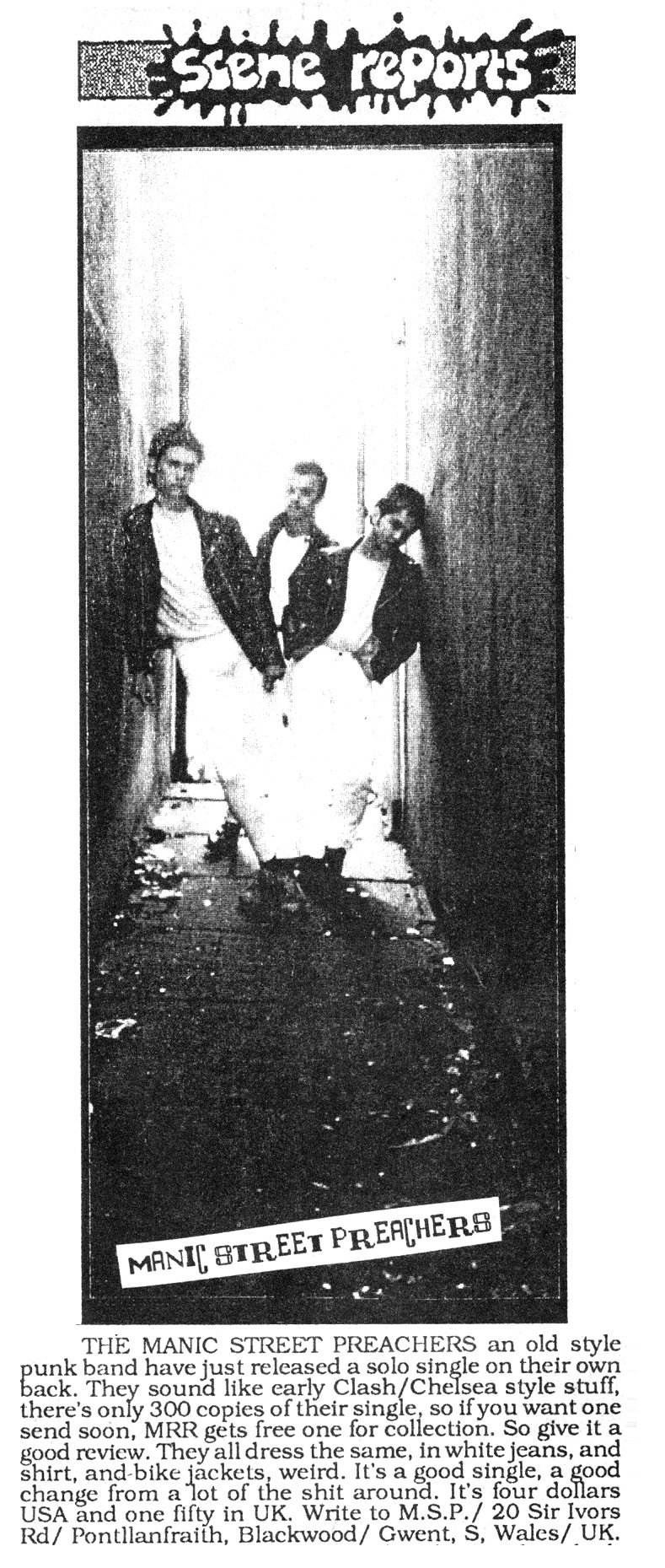
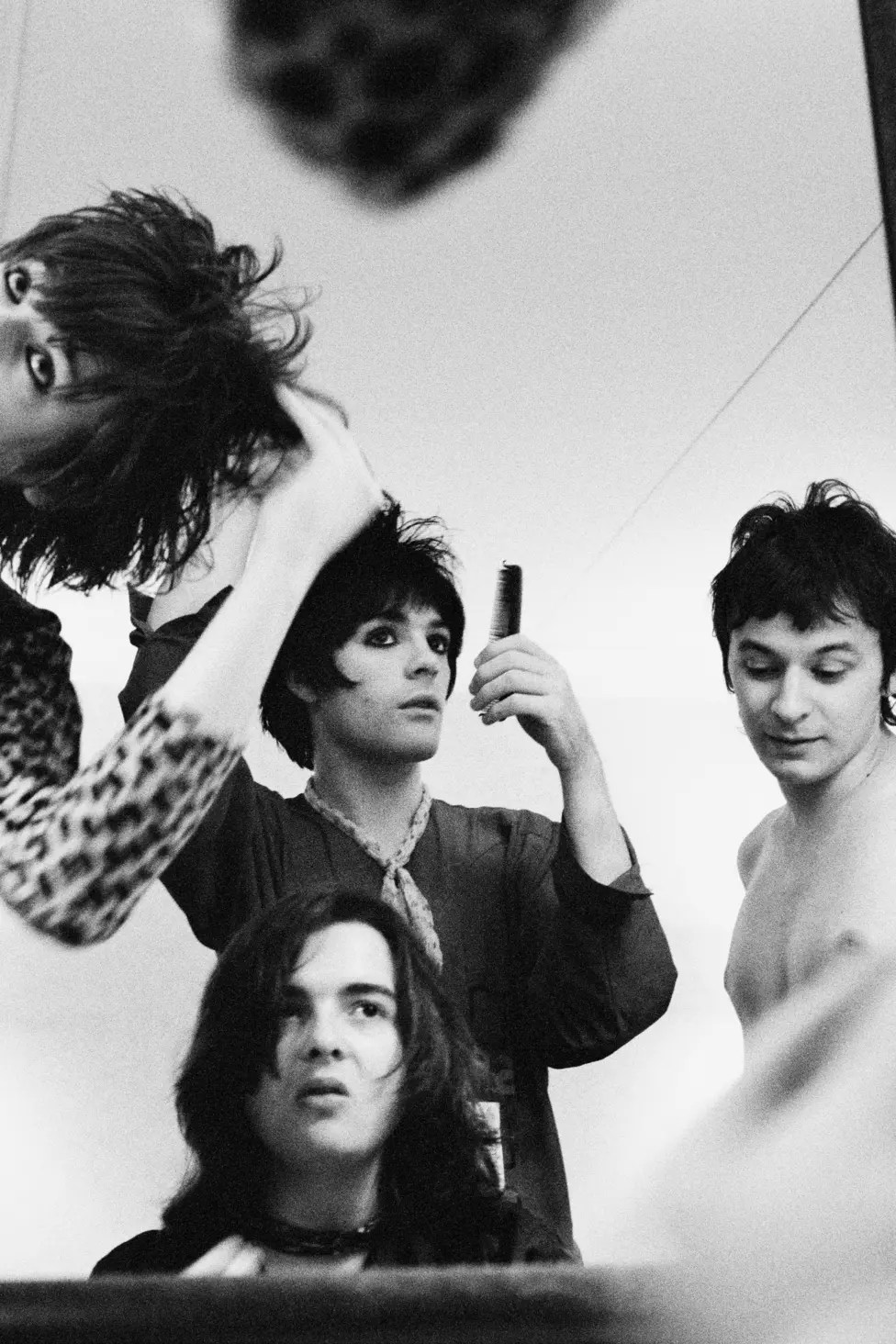

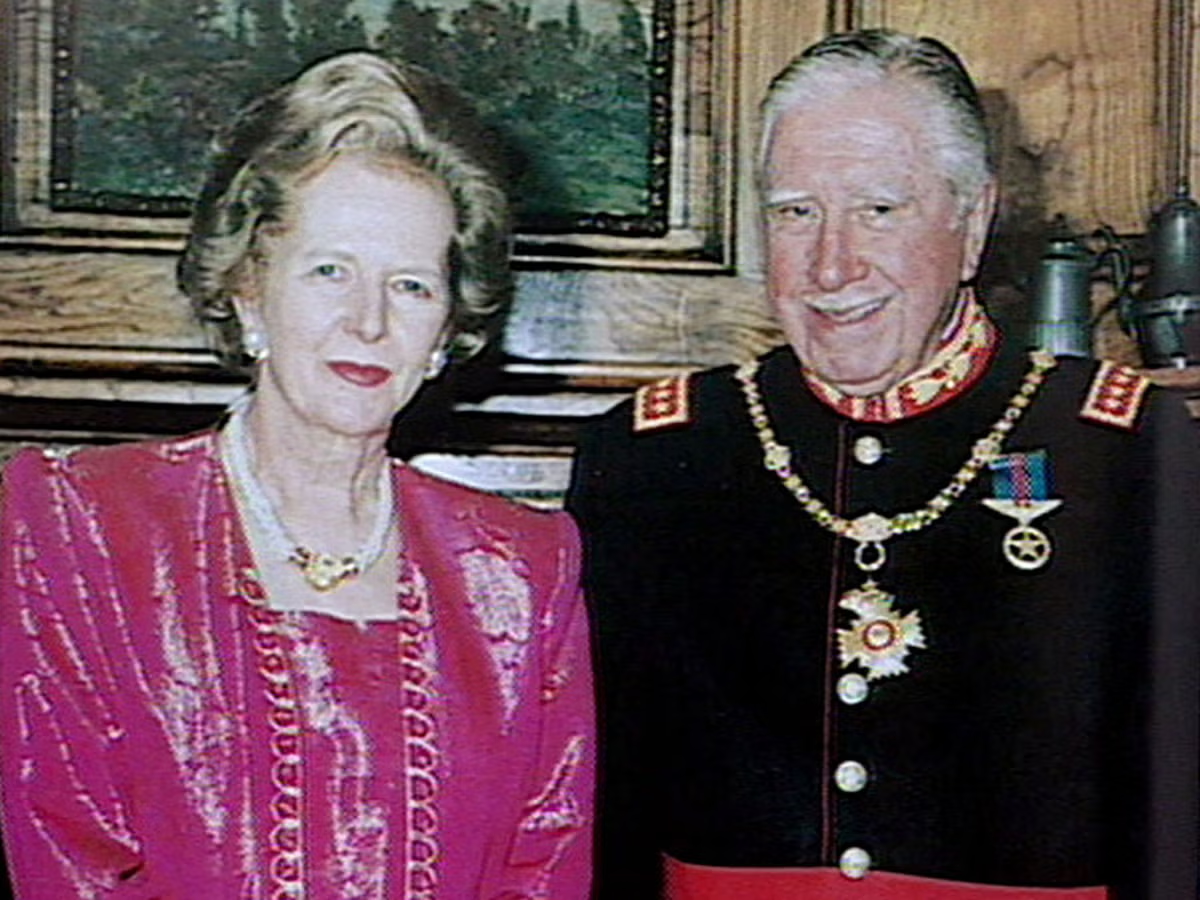
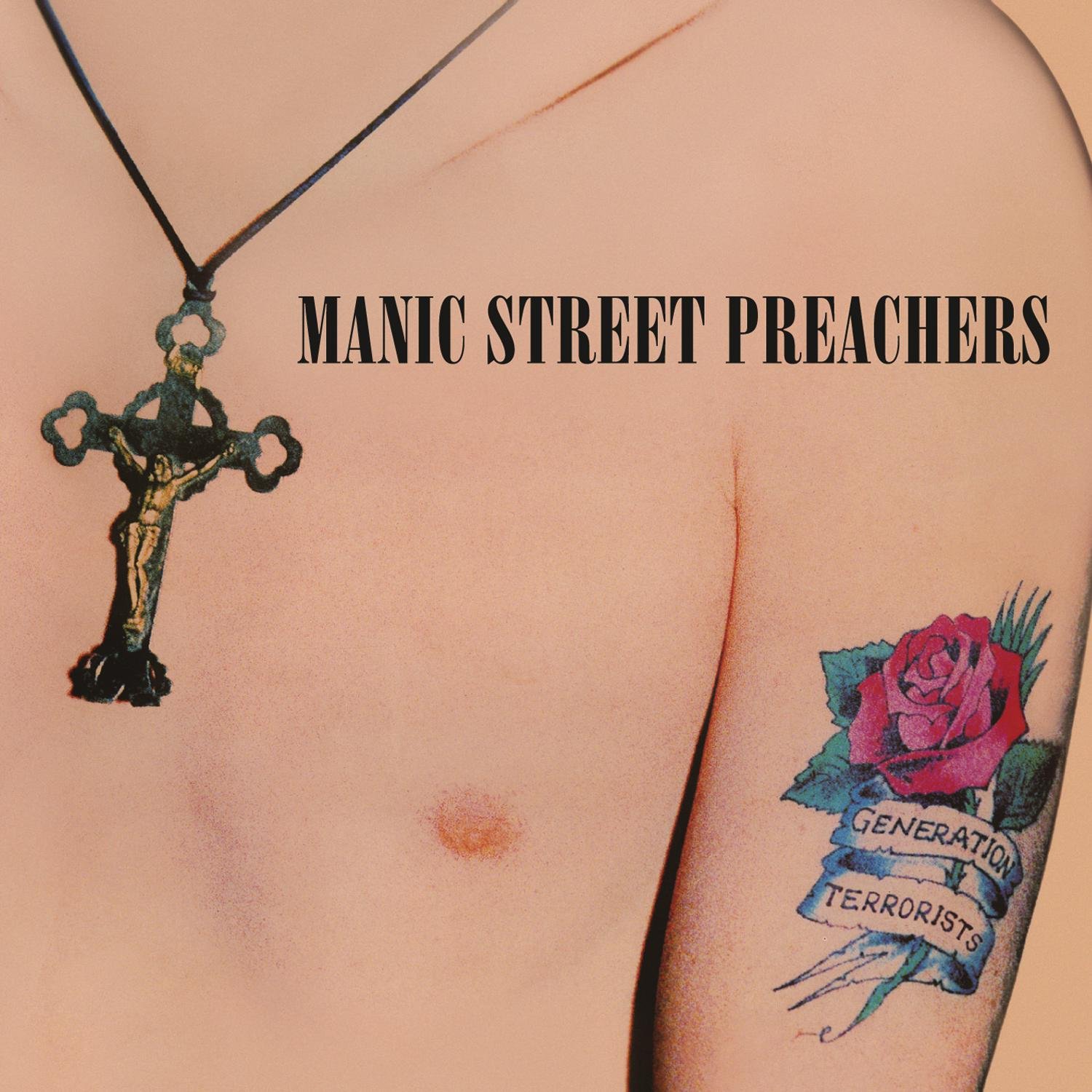
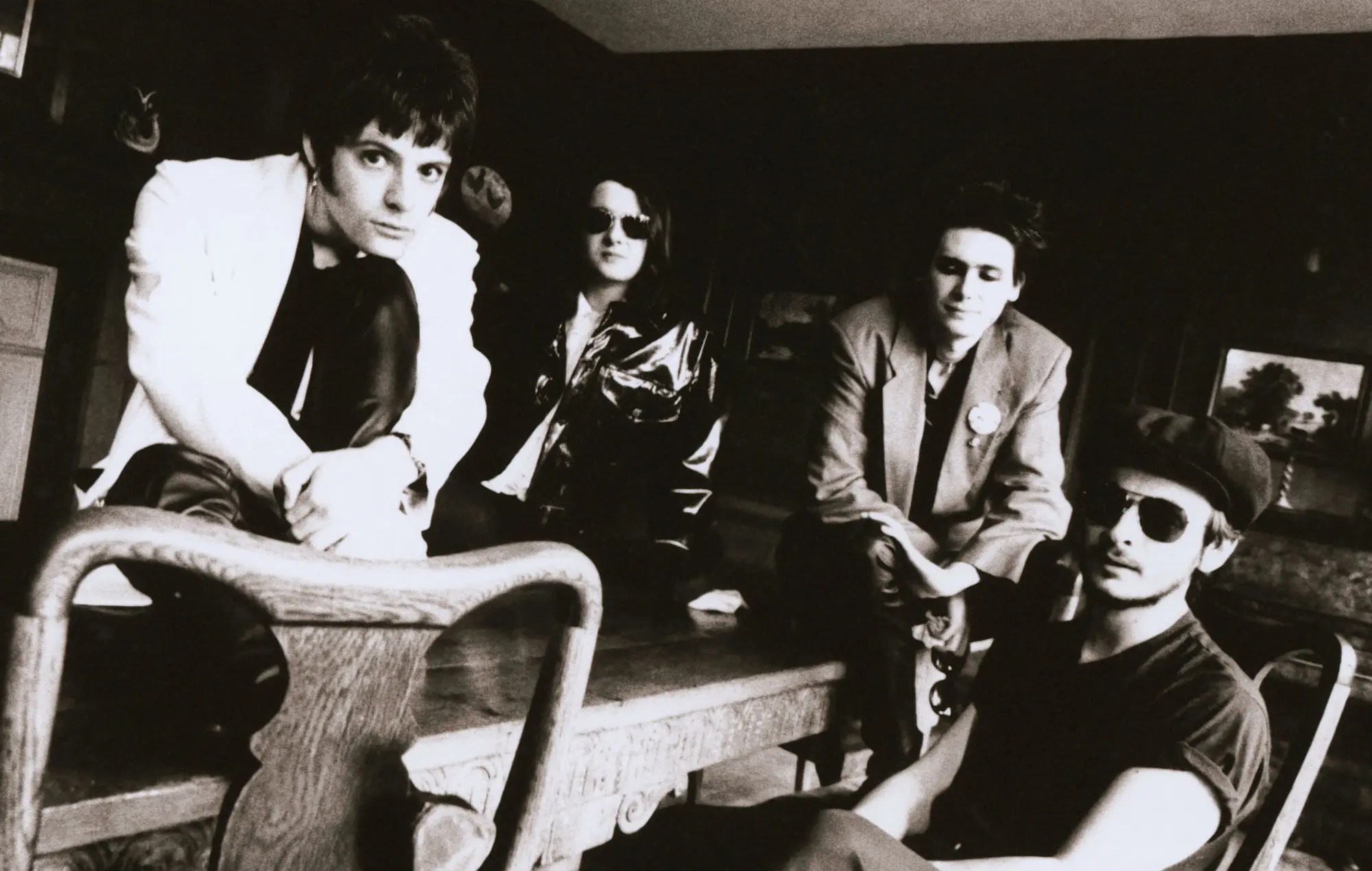


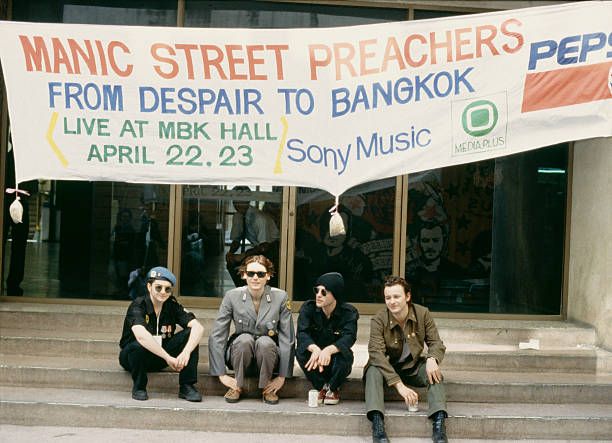



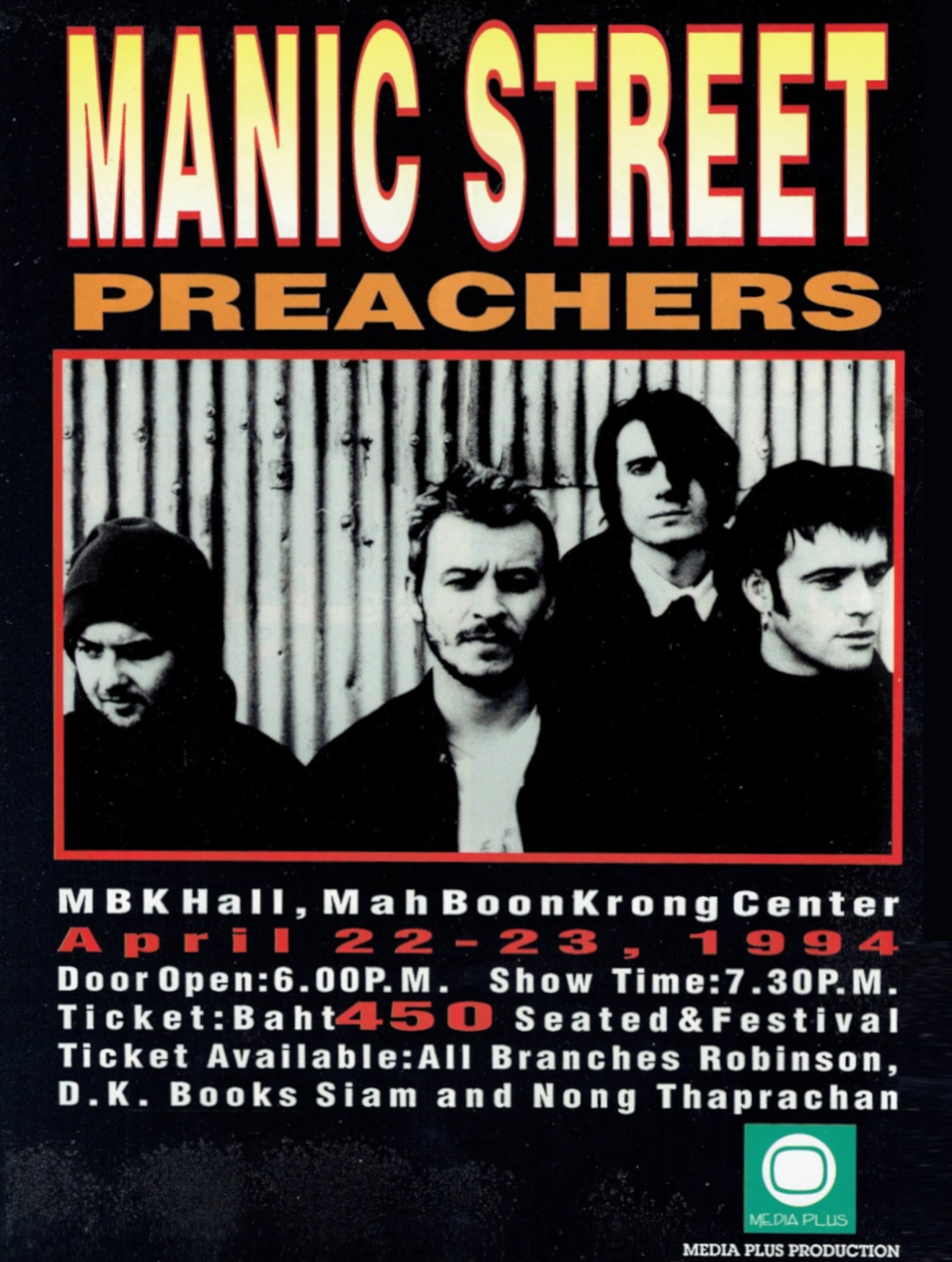


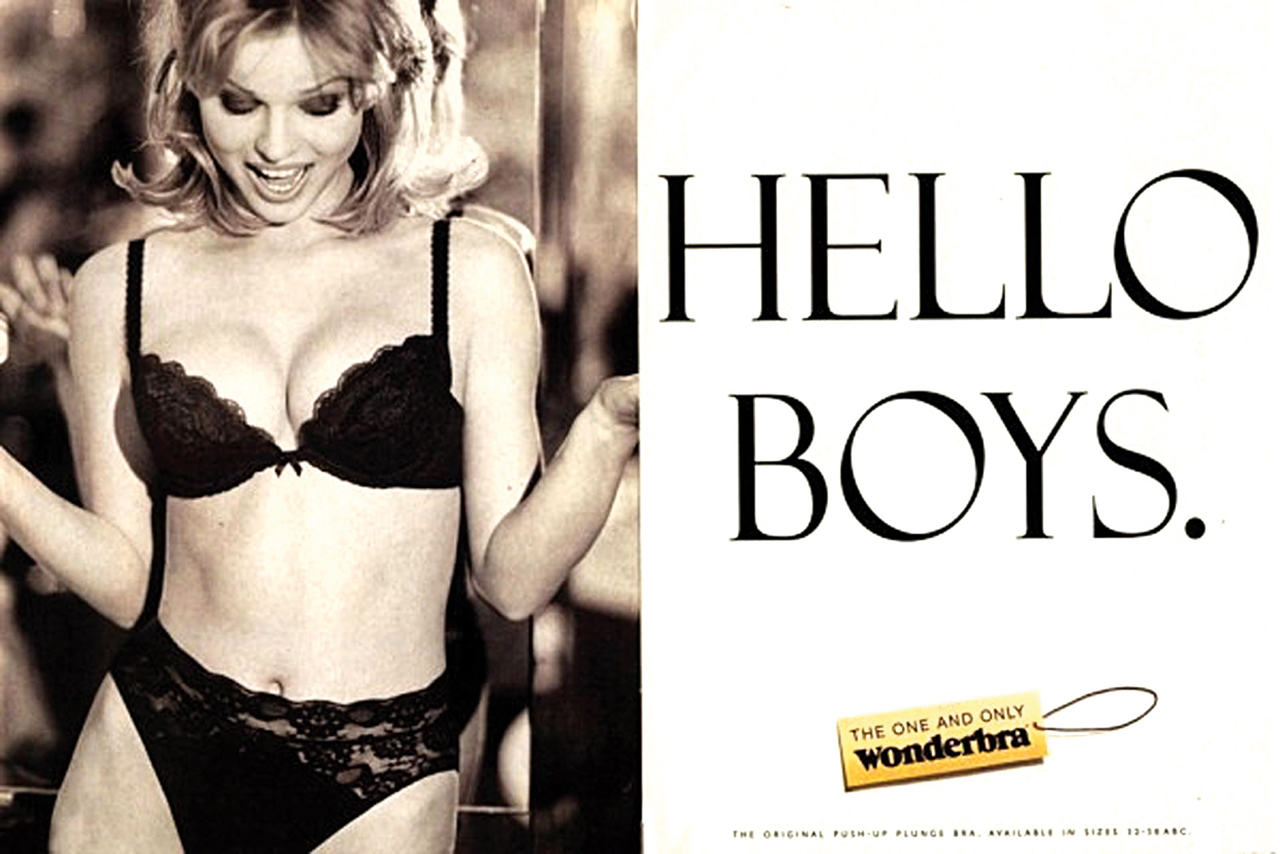
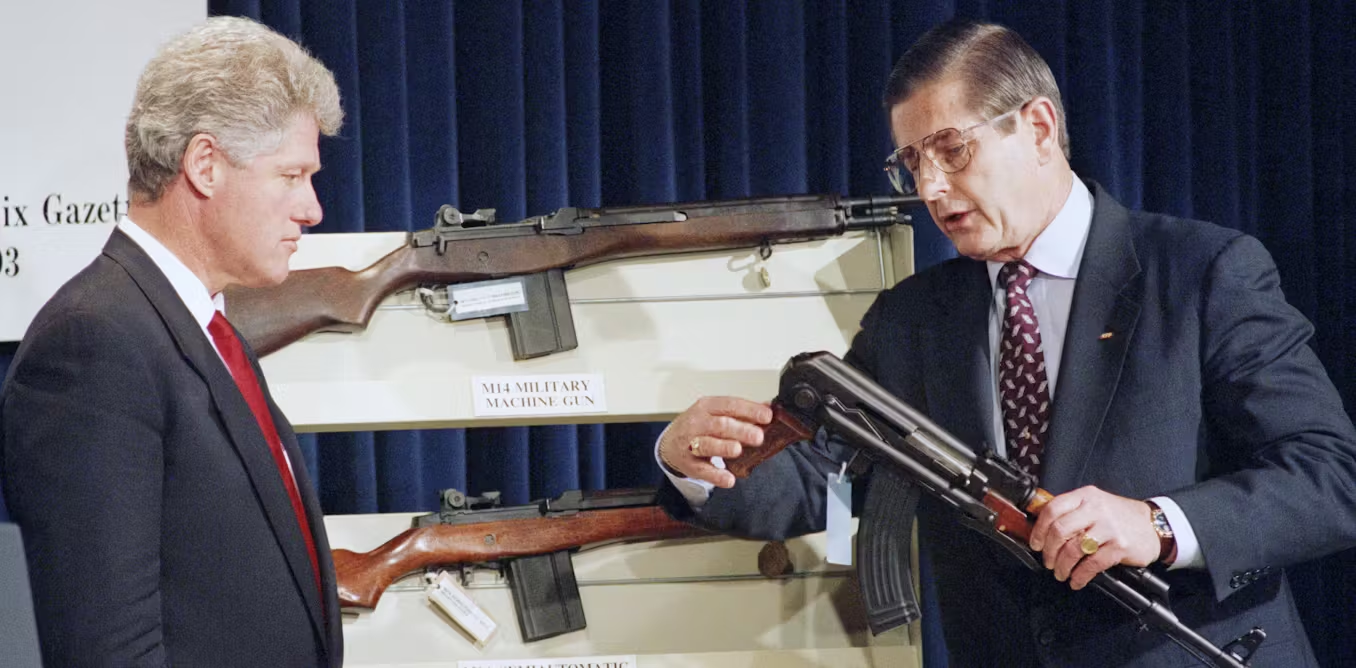


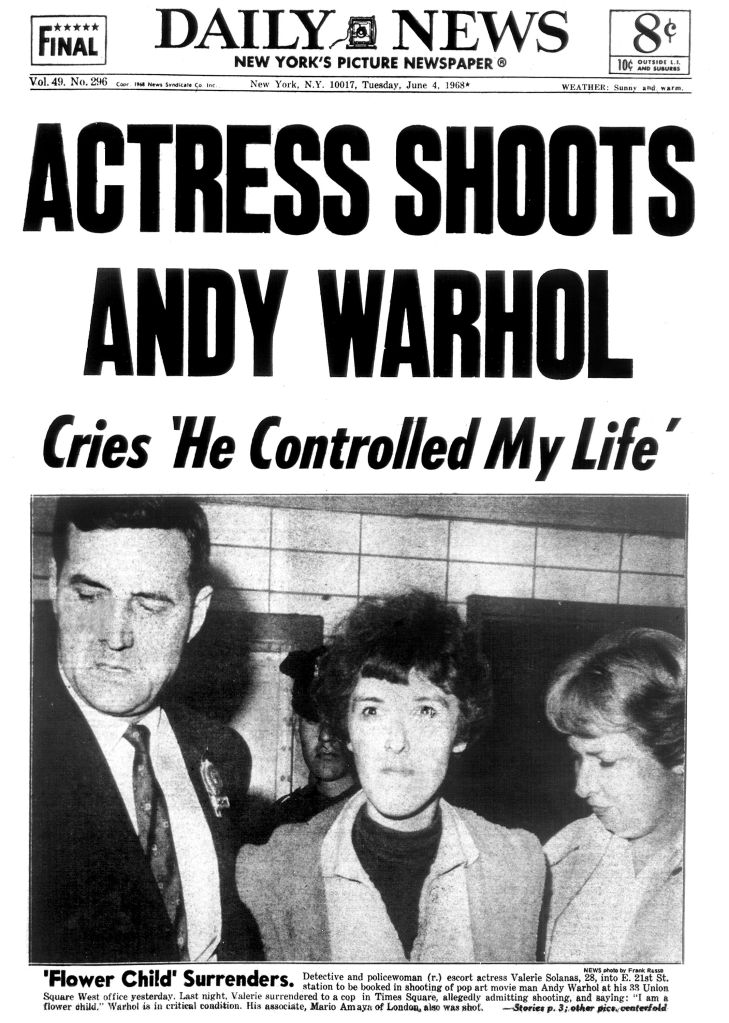



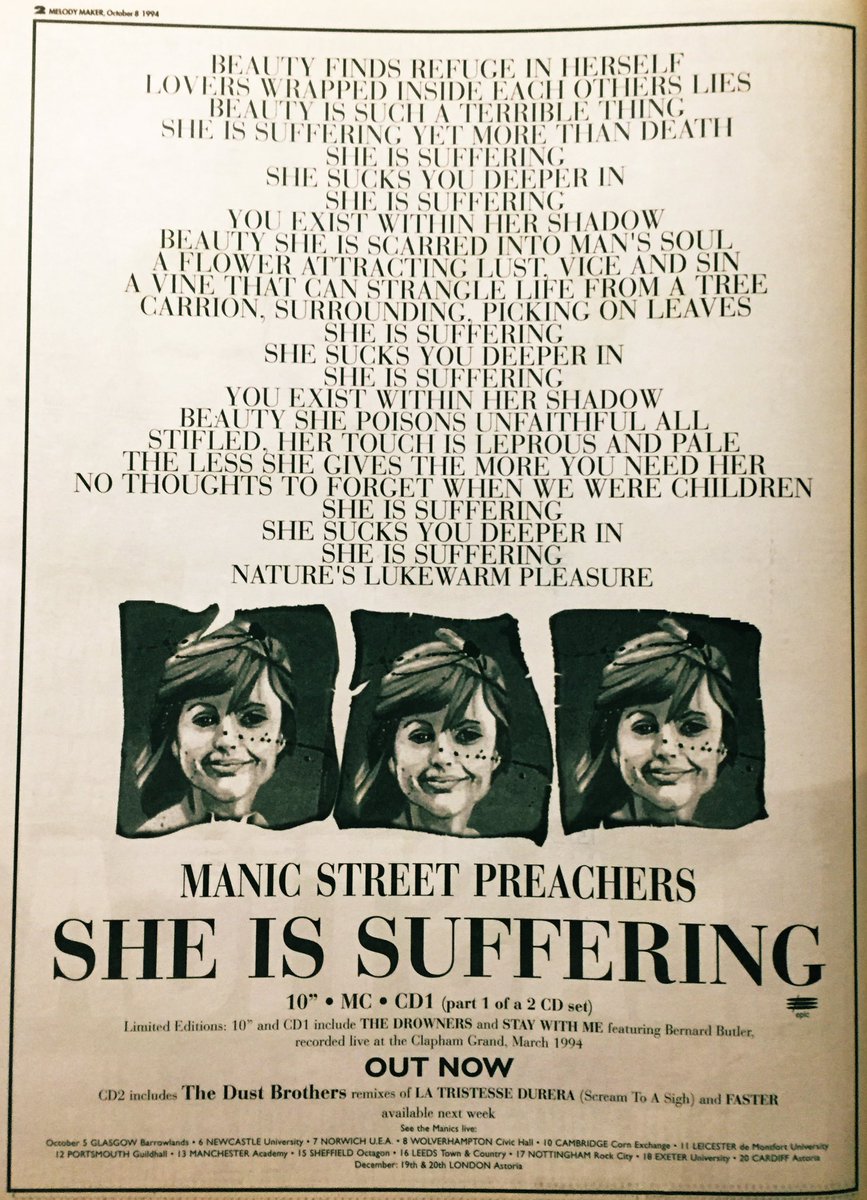

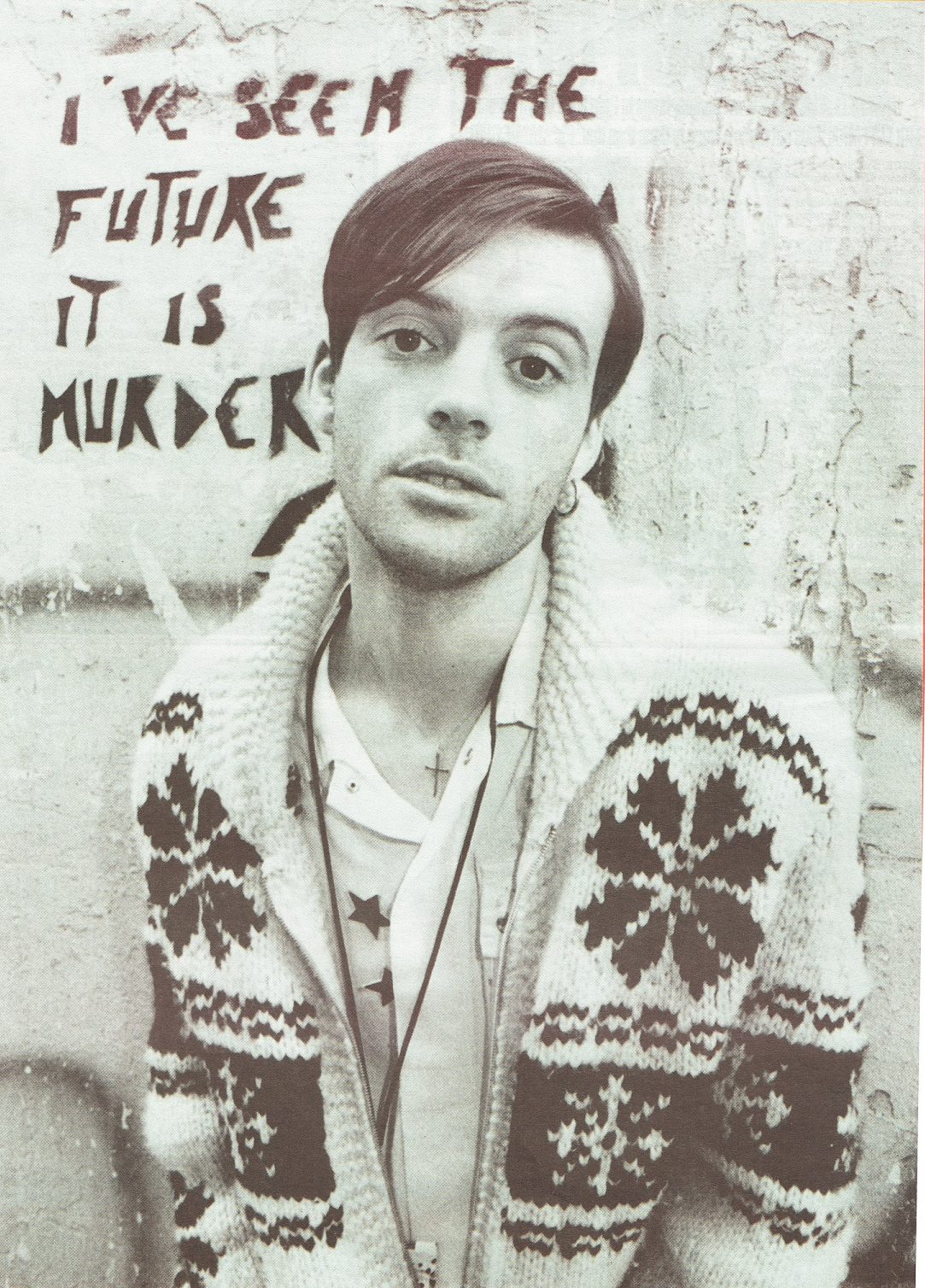








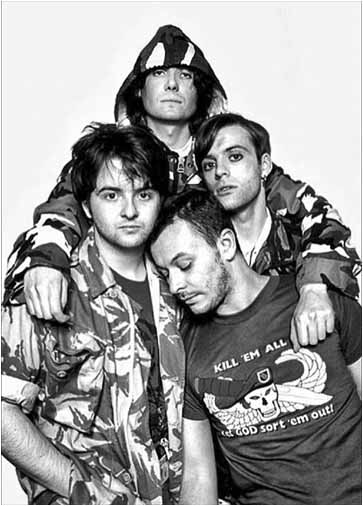




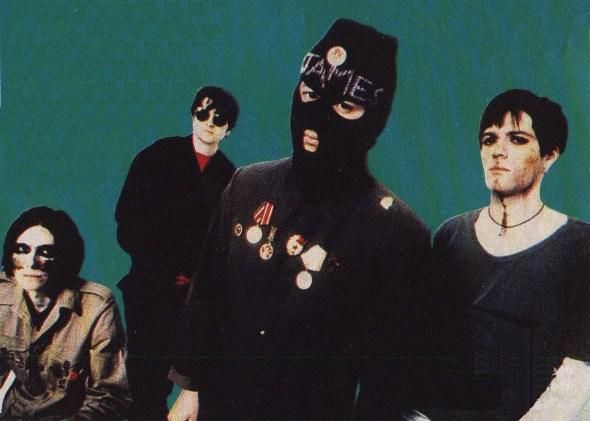
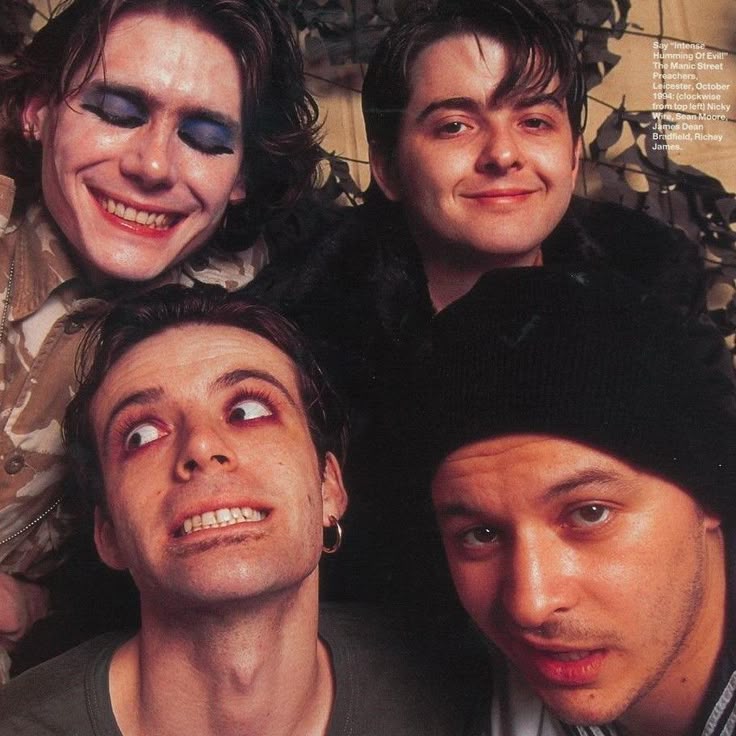



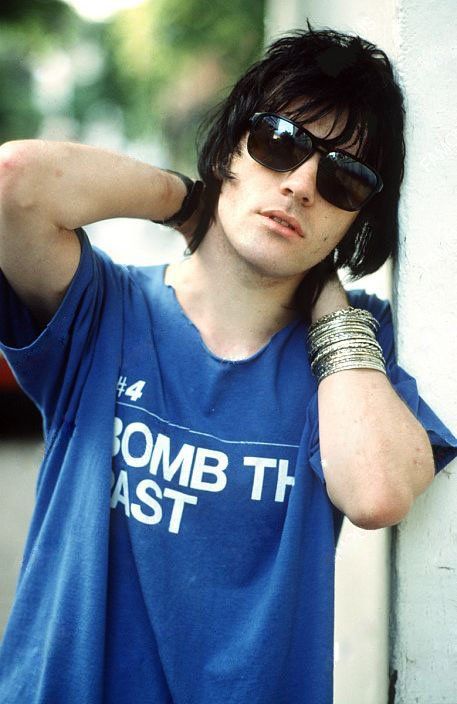





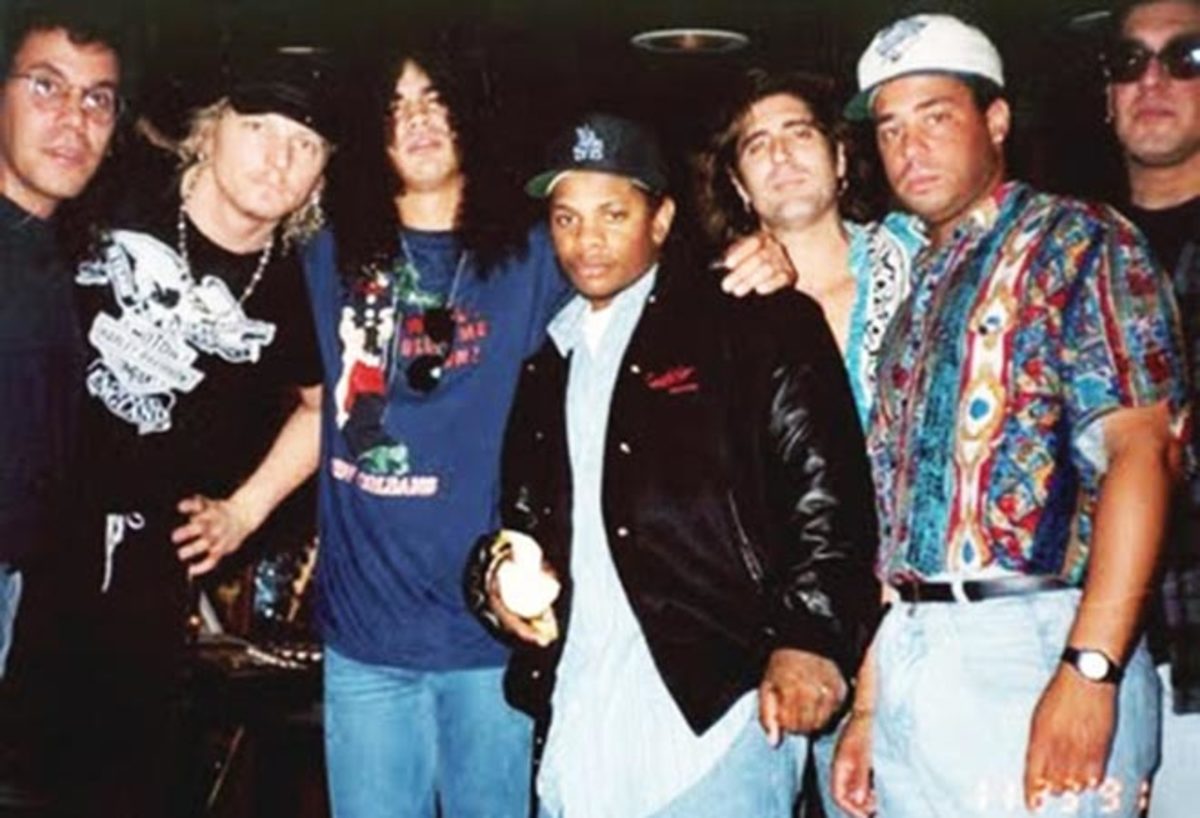


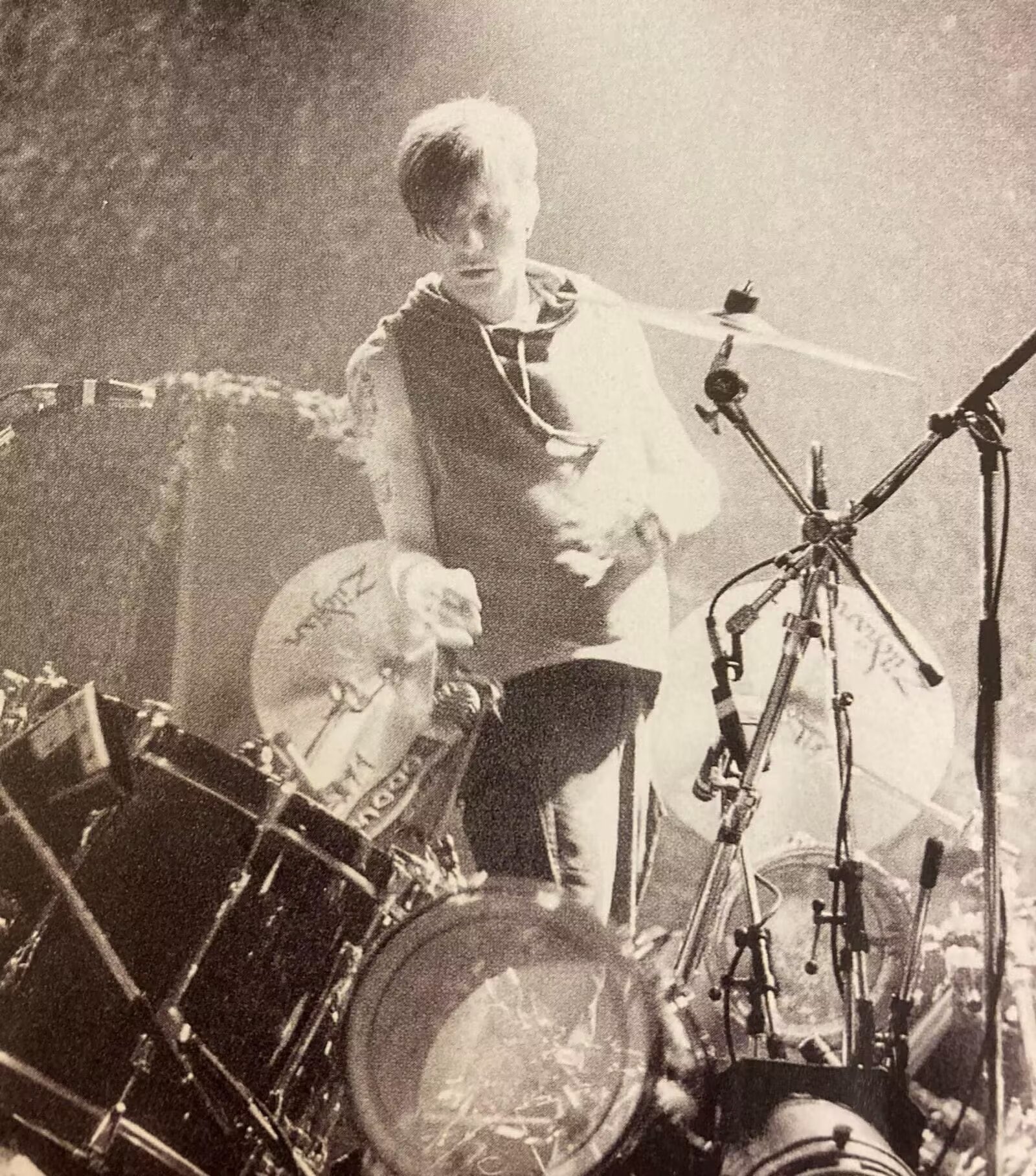

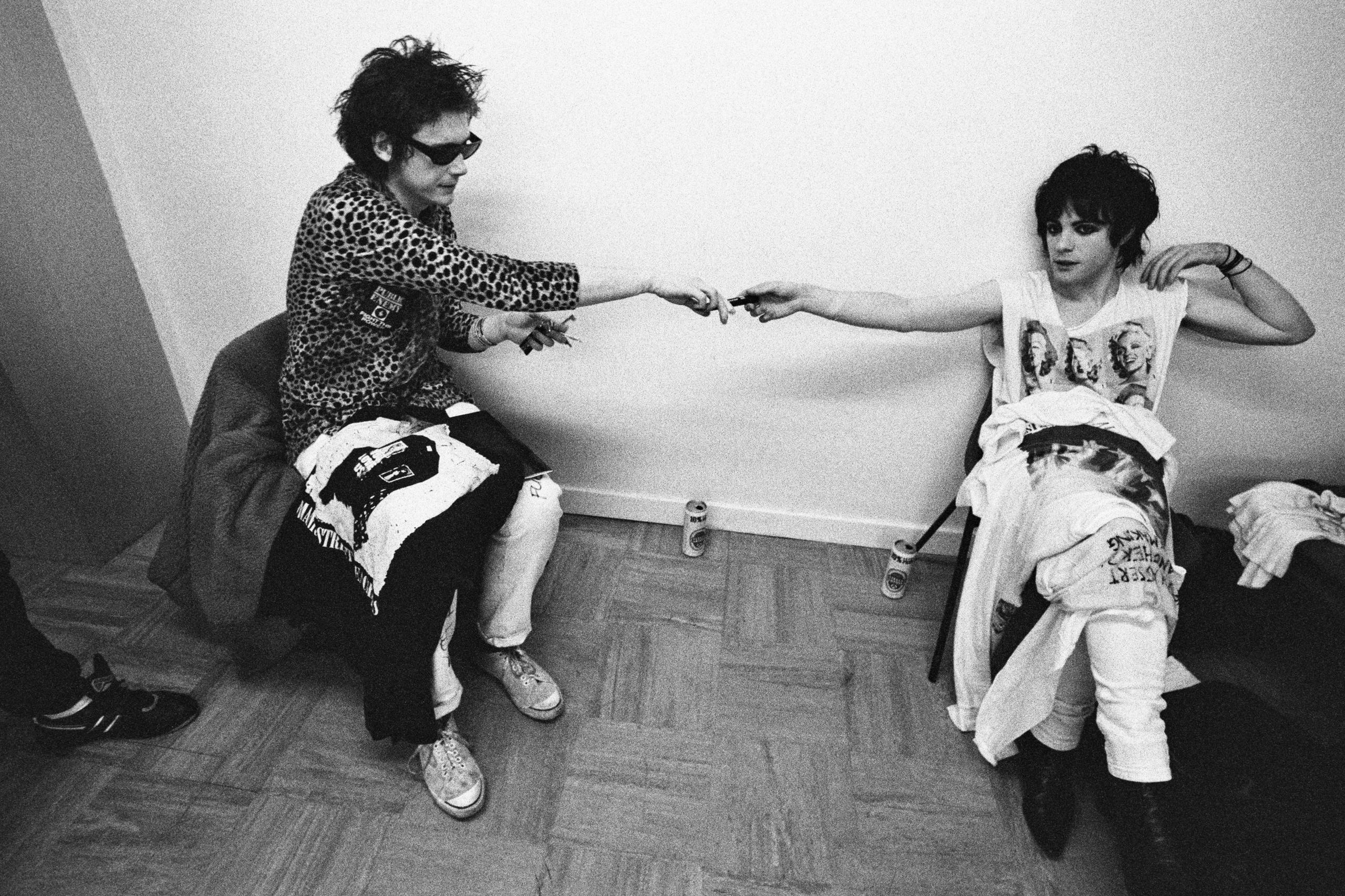



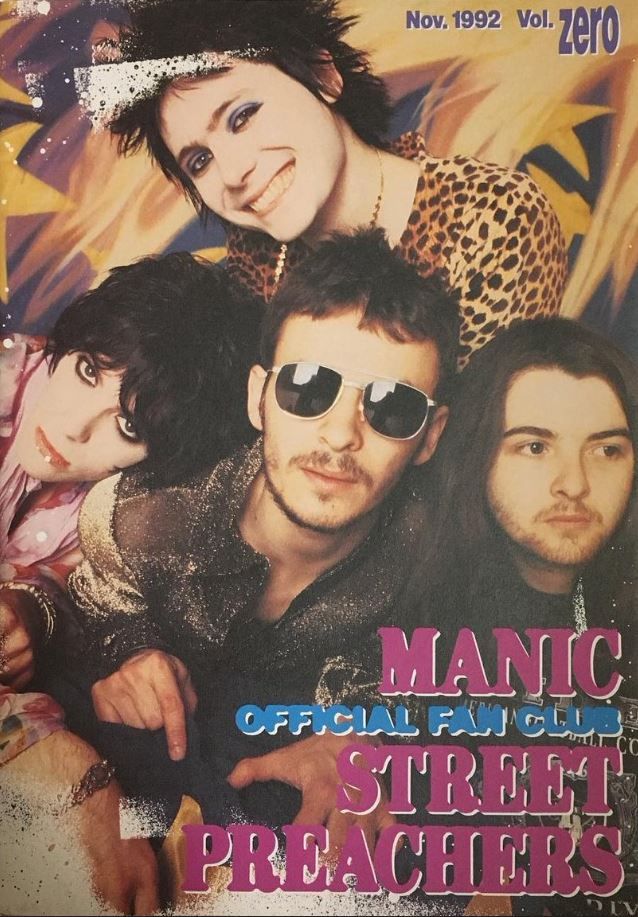
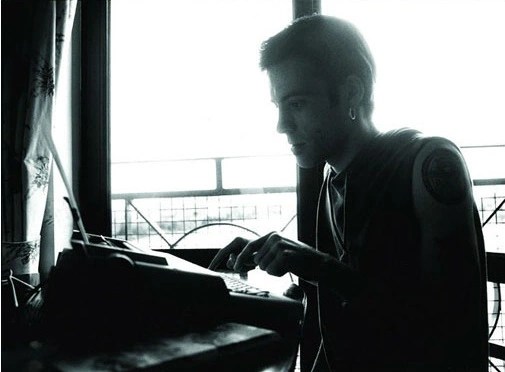





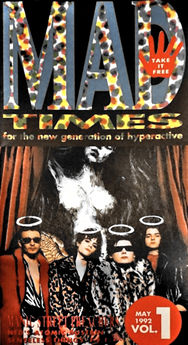

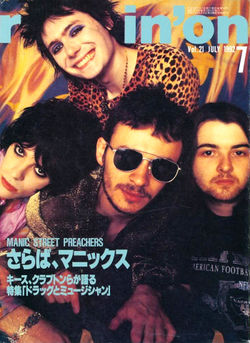
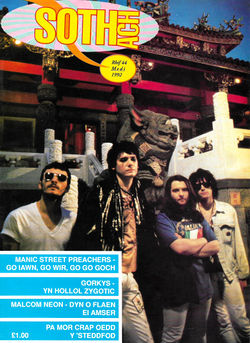
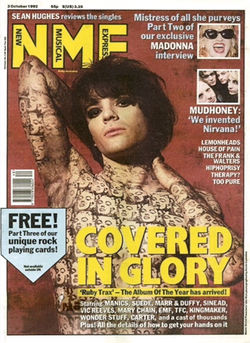


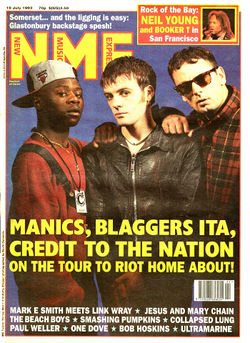
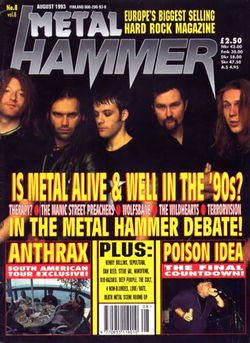


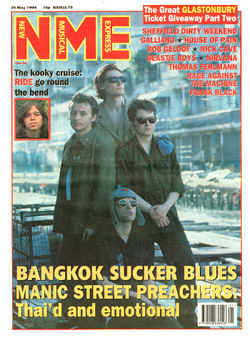




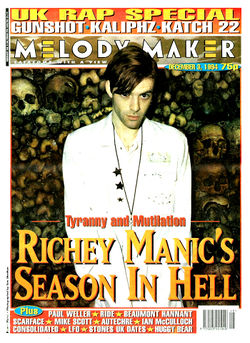
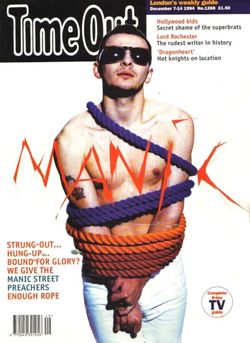
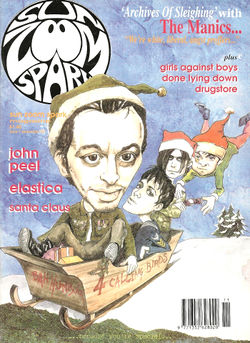


 Necessary Evil
3 thoughts on “The Holy Bible: The End of History, the End of the Manic Street Preachers, and the Greatest Album of All Time”